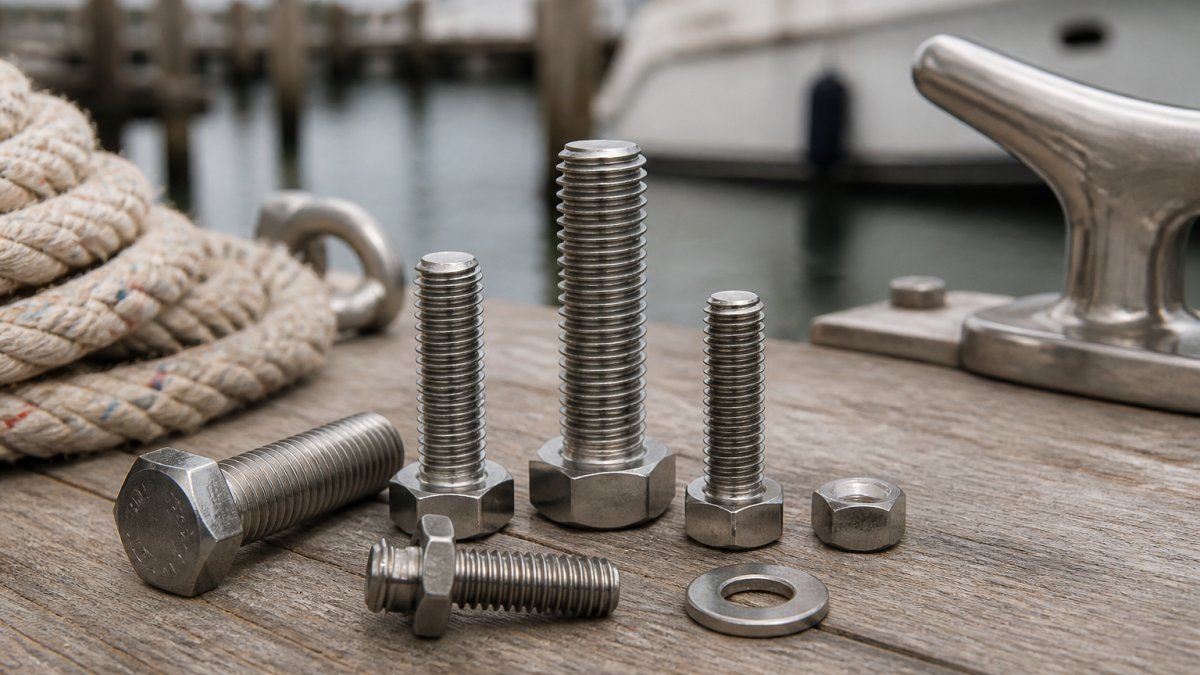
 blog
5 Best Corrosion Resistant Marine Grade Bolts
Last Updated: 25 October 2026
Quick Summary
For most saltwater work, 316 stainless steel marine grade bolts are the default choice, as the molybdenum in the alloy improves resistance to chloride pitting compared with 304 grade. Silicon bronze is the better option for wooden hulls and traditional builds, where stainless would create a mismatch with bronze fittings.
- A4 stainless is the same family as 316, so treat an A4-marked bolt as 316 grade.
- Bronze is softer and costs more than stainless, and suits wooden boat restoration.
- Galvanic corrosion occurs when two different metals touch in saltwater, which acts as an electrolyte.
- White or green powdery residue around a joint is an early sign of corrosion.
- Over-tightening a bolt to stop a leak crushes the sealing washer and worsens water ingress.
Table of Contents
- What Makes a Bolt Marine Grade
- 316 Stainless Steel Marine Bolts: The Saltwater Standard
- Bronze Marine Fasteners: When Silicon Bronze Beats Stainless
- Galvanic Corrosion Between Marine Metals: What to Check Before You Fit
- Marine Bolt Maintenance: Keeping Fixings Sound Between Refits
- Sourcing the Right Marine Grade Bolts for Your Project
- Frequently Asked Questions
What Makes a Bolt Marine Grade
Salt, spray and constant damp destroy ordinary fasteners fast. A marine grade bolt is a fastener built from an alloy and coating chosen to resist corrosion in wet, salty conditions, so it holds its strength where standard zinc-plated steel would fail. Swiftfix Distributors Ltd supplies fixings for boat builders and marine engineers.
Three things separate a true marine fastener from a hardware-shop bolt:
- Alloy: the metal itself must resist chloride attack, not just carry a coating
- Grade consistency: the bolt, nut and washer should be the same or a compatible alloy
- Application fit: the right grade for the metal it touches and the load it carries
A shiny finish tells you very little. What matters is what the bolt is made of and what it is bolted into. Get either wrong and the best corrosion resistant marine grade bolts on the market will still fail.
316 Stainless Steel Marine Bolts: The Saltwater Standard
For most saltwater work, 316 stainless steel marine bolts are the default choice. The "316" refers to a stainless alloy containing molybdenum, which improves resistance to chloride pitting compared with the more common 304 grade. That difference is why 316 is the grade most often specified for deck hardware, rigging fittings and anything regularly soaked in spray.
A4 stainless is the same family as 316, and the terms are used interchangeably in fastener catalogues. When you see a bolt marked A4, treat it as a 316-grade fastener.
Where 316 wins:
- Deck fittings and cleats exposed to constant spray
- Through-hull and below-waterline hardware
- Stainless steel fabrications where matching grades prevent trouble
Where it falls short: 316 is not invincible. It can suffer crevice corrosion in oxygen-starved gaps, and it is not the right choice against aluminium without isolation. If you need a specific A4 316 stainless wood screw, you can order A4 stainless steel wood screws online in the dimensions your job needs.
Bronze Marine Fasteners: When Silicon Bronze Beats Stainless
Silicon bronze marine fasteners earn their place on traditional and wooden boats. Bronze is copper-based, so it resists saltwater well and, crucially, it is far kinder to wooden hulls and to other copper alloys than stainless is. On a timber vessel with bronze fittings, introducing stainless creates a mismatch that invites corrosion.
The trade-offs are real. Bronze is softer than stainless, costs more, and is not suited to high-load structural joints where steel strength is required. It is also harder to source in specialist sizes.
Best for: wooden boat restoration, traditional build, and matching existing bronze fittings. Skip if: you need maximum tensile strength or you are working on an aluminium or stainless structure.
A common mistake is mixing bronze and stainless on the same fitting without thinking about how the two metals interact. That brings us to the real culprit behind most marine fastener failures.
Galvanic Corrosion Between Marine Metals: What to Check Before You Fit
Galvanic corrosion between marine metals happens when two different metals touch in the presence of saltwater, which acts as an electrolyte. One metal, the less noble one, corrodes preferentially and can waste away surprisingly quickly. This is the single most common reason a fitting that looked fine at installation fails within a season.
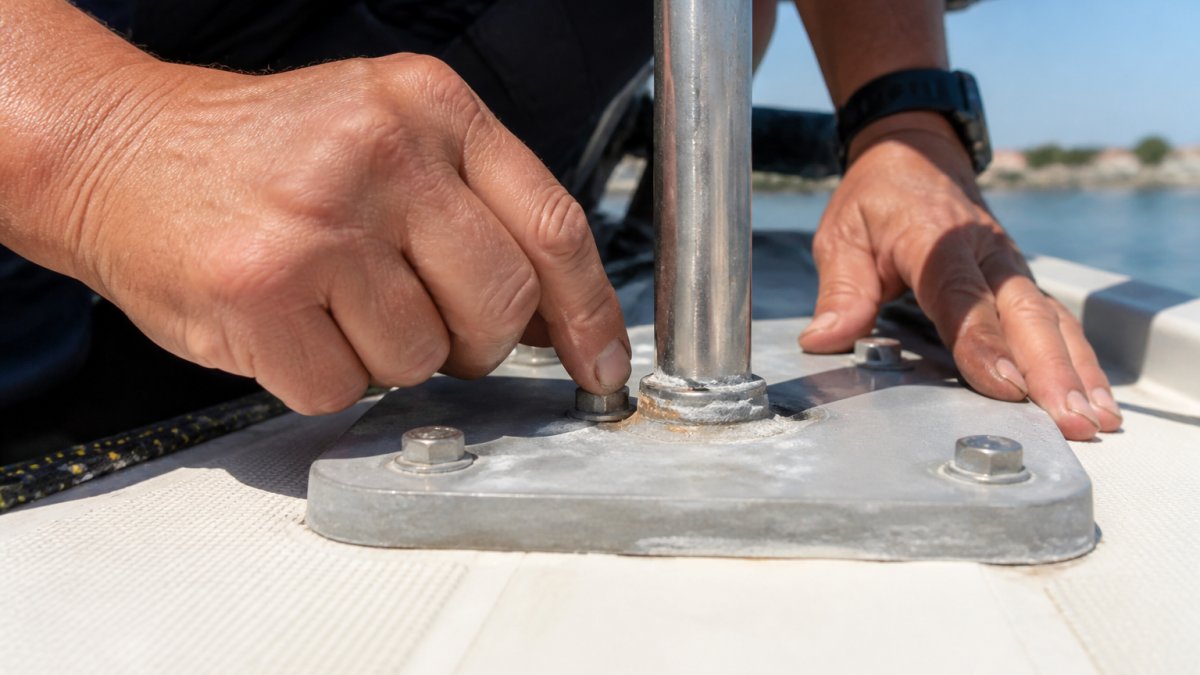
Before you fit anything, run this check:
- Identify every metal in the joint, including the fastener, fitting and structure
- Confirm the fastener is the more noble metal or is isolated from the structure
- Fit a barrier (nylon washer, isolating bush or sealant) where dissimilar metals must meet
- Avoid trapping moisture in gaps that cannot drain
- Match the grade of bolt, nut and washer to prevent internal corrosion
Stainless against aluminium is the classic problem pairing. If you are working with a corrosion-resistant grade and want a matching 316 A4 stainless fixing, you can browse 316 A4 stainless annular ringshank nails for jobs where that grade is specified.
Marine Bolt Maintenance: Keeping Fixings Sound Between Refits
Even the best corrosion resistant marine grade bolts need checking. Maintenance is about catching the early signs before a fitting fails under load. A quick inspection each season pays for itself.
What to look for:
- White or green powdery residue around a joint, an early sign of corrosion
- Rust staining on or near a stainless fastener, which often points to contamination from a carbon-steel tool or swarf
- Loose or weeping fittings where water is getting behind a seal
- Cracked or perished sealing washers
A common mistake is over-tightening a bolt to stop a leak. That crushes the sealing washer and makes water ingress worse. Where water is getting in around a fixing, a self-drilling screw with an integral sealing washer is a practical repair. Clean threads, apply a suitable anti-seize where grades differ, and re-check torque to the spec.
Sourcing the Right Marine Grade Bolts for Your Project
Sourcing is where good intentions meet reality. The grade you need often comes in a size the local trade counter does not stock, and waiting weeks for a specialist order stalls the whole refit. Swiftfix Distributors Ltd specialises in larger sizes, longer lengths and larger diameters of construction and marine fixings, held in stock.
When you order, give the supplier the full spec, not a rough description:
| Detail to specify | Why it matters |
|---|---|
| Alloy and grade (e.g. A4 316) | Determines corrosion resistance |
| Diameter and length | Must match the drilled hole and load |
| Thread type and length | Affects grip and joint strength |
| Head type (hex, Pozi, countersunk) | Must suit the tool and finish |
| Quantity and packaging | Avoids short orders mid-job |
If you are assembling a project, a stainless steel fixing band is a useful companion item for strapping and support work. Order the exact spec, confirm the grade in writing, and keep a small stock of the sizes you use most so a single failed fastener never stops the job.
Frequently Asked Questions
What is the best material for marine grade bolts?
For most saltwater work, 316 stainless steel is the practical default: it holds up in splash and spray zones and takes high structural loads. Silicon bronze is the better choice below the waterline and where fasteners sit permanently wet, because it resists chloride attack and behaves well against timber. The right answer depends on where the bolt sits, what it connects and whether it will be inspected. Match the material to the fitting it touches, not just to the boat.
Are 316 stainless steel marine bolts suitable for saltwater?
Yes, 316 stainless steel marine bolts are the standard choice for saltwater exposure above the waterline. The molybdenum content gives them noticeably better chloride resistance than 304. Two caveats matter: they can still suffer crevice corrosion in stagnant, oxygen-starved joints, and they pit if left coated in salt deposits. Rinse them after exposure and use a barrier compound on threads. Below the waterline, bronze or a properly specified duplex grade is often the safer call.
How can galvanic corrosion between marine metals be prevented?
Separate dissimilar metals with an insulating barrier: nylon washers, isolating bushes or a dedicated barrier paste on the thread and under the head. Keep the anode-to-cathode area ratio favourable, meaning a small stainless bolt into a large aluminium plate is a bad combination. Use the least noble metal you can for the fastener, inspect joints annually and replace sacrificial anodes on schedule. Where isolation is impossible, choose fasteners close to the fitting on the galvanic series.
How should marine bolts be maintained to reduce corrosion?
Freshwater rinse after every saltwater outing, then dry. Check torque at the start of each season, since vibration loosens fixings and a loose bolt traps water. Apply a corrosion-inhibiting compound to threads at installation and reapply at refits. Inspect for white or green deposits, pitting and staining around the head, which signal the start of corrosion. Replace any bolt showing crevice attack rather than cleaning it up, because the loss of section is usually worse than it looks.
The challenge is not finding a bolt. It is finding the right grade, in the right size, without a six-week wait. Swiftfix Distributors Ltd stocks high-quality construction and marine fixings, including specialist larger sizes and diameters that standard ranges do not carry, so you can specify with confidence. Get started with Swiftfix Distributors Ltd and fit fasteners that hold up to saltwater season after season.
