 listicle
7 Cutting Tools for Stainless Steel and How to Pick Them
Last Updated: 1 November 2026
Quick Summary
Cutting tools for stainless steel are chosen by matching the tool family to the material form, grade and task, because stainless work-hardens as it is cut. Disc, pipe, cold saw, milling, nibbler and shear options each suit different jobs, and carbide geometry matters most for precision work.
- Stainless steel work-hardens during cutting, so a dull or misapplied tool quickly stops cutting effectively.
- Match the tool to the stock form first: sheet, bar, tube or profile each suit a different tool family.
- Use stainless-rated cutting discs for quick cuts, but control heat to avoid discolouring the edge.
- Pipe cutters give square, low-burr ends on tube, though large diameters are slow to cut manually.
- Grade matters as much as tool type: austenitic grades such as SUS304 and SUS316L demand sharp edges and controlled feed.
Table of Contents
- Why Stainless Steel Is Harder to Cut Than Mild Steel
- Comparison of Cutting Tool Types by Job
- Stainless Steel Cutting Discs for Sheet and Bar
- Stainless Steel Pipe Cutters for Tube and Pipework
- Stainless Steel Milling Cutters and Carbide Options
- Carbide Cutting Tools for Stainless Steel: Grades, Geometry and Tool Life
- Choosing Your Next Stainless Steel Cutting Tool from Swiftfix
- Frequently Asked Questions
Why Stainless Steel Is Harder to Cut Than Mild Steel
Stainless steel work-hardens as you cut it, which is the main reason it punishes the wrong tool. A blade that slides through mild steel can glaze, chip or simply stop cutting when pushed through stainless. Choosing the right tool for the job starts with understanding that behaviour.
Choosing a cutting tool is a question of matching the tool to this material, this form and this task. The guidance below is organised by job rather than by brand, so you can match the tool to the work in front of you.
Stainless grades also differ. Austenitic grades are tougher and more prone to work-hardening than many carbon steels, so they demand sharp edges, controlled feed and suitable cutting speeds. Ferritic and duplex grades behave differently again, which is why grade matters as much as tool type.
Comparison of Cutting Tool Types by Job
Start by matching the form of the stock to the tool family. A bar, a tube and a sheet each suit a different approach, and no single tool handles all three well. The table below compares the main tool families by the job they do best, the material forms they suit, the cut quality you can expect and the main trade-off. Use it as a first filter, then check the specific product's stated range against your material thickness and grade.
| Tool family | Best for | Material forms | Cut quality | Main trade-off |
|---|---|---|---|---|
| Stainless-rated cutting discs | Quick cuts on sheet and bar | Sheet, flat bar, thin plate | Good, but burr and heat tint likely | Heat management and post-cut cleaning needed |
| Pipe cutters | Clean ends on tube and pipework | Tube, pipe | Square, minimal burr | Slow on large diameters; wheel must be stainless-rated |
| Cold saws | Accurate, repeatable cuts in the workshop | Bar, profile, thick wall tube | Excellent, low burr | Higher upfront investment; slower setup |
| Milling cutters (carbide or HSS) | Machined features, slots and pockets | Bar, plate, castings | Good to excellent, depends on geometry | Needs suitable machine, speeds and feeds |
| Nibblers and punches | Sheet metal profiling without heat | Sheet, thin plate | Good, no heat-affected zone | Limited to sheet thickness; tool wear on stainless |
| Shear cutters | Straight cuts and trimming | Sheet, strip | Clean, minimal distortion | Not for thick plate or curved work |
Use this table as a starting filter, then check the specific product's stated range against your material thickness and grade. For austenitic grades such as SUS304 and SUS316L, favour tool families that produce a clean, controlled cut rather than those that rely on brute force, because work-hardening at the cut line will punish a dull or misapplied tool. Ferritic grades are more forgiving, but they still benefit from sharp edges and suitable speeds.
Stainless Steel Cutting Discs for Sheet and Bar
Cutting discs are the fastest route for sheet and bar when you need a quick cut rather than a precise finish. Discs rated for stainless steel are the usual choice, because general-purpose discs can load up and overheat on austenitic grades. Keep speed steady and let the disc do the work, since pressing hard increases heat and work-hardening at the cut line.
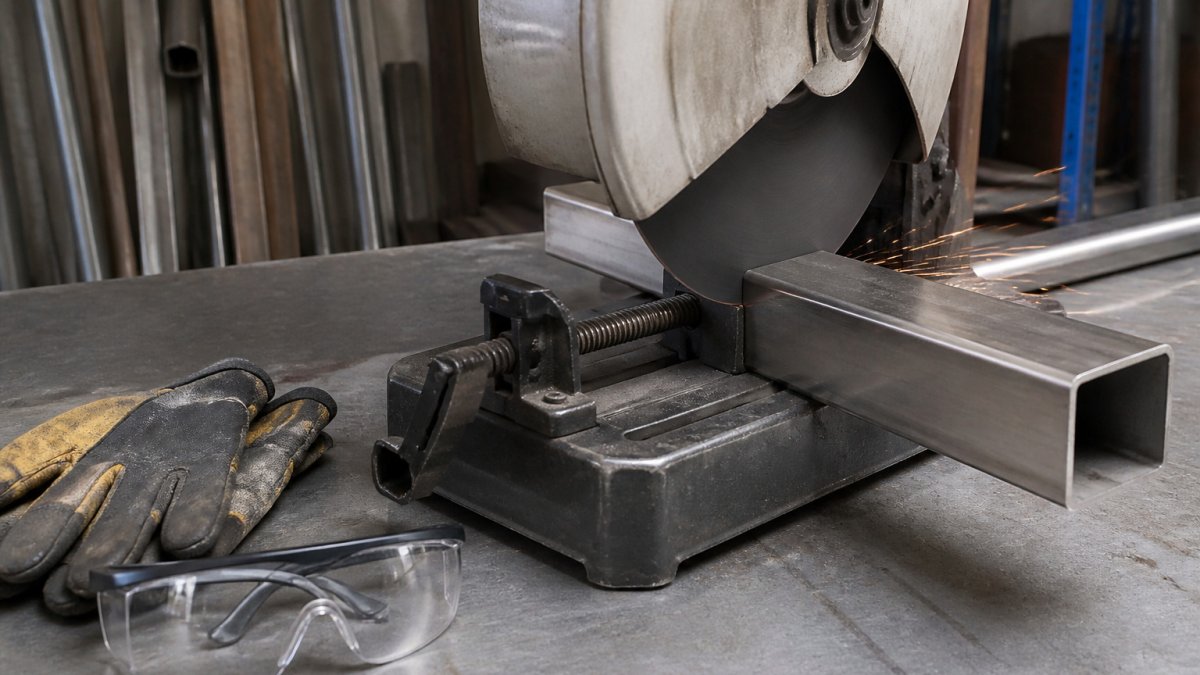
Check the disc diameter, thickness and maximum speed against your grinder before you buy. Watch out: a disc that runs hot will discolour the stainless and can leave a heat-tinted edge that needs cleaning before welding or polishing.
Stainless Steel Pipe Cutters for Tube and Pipework
Pipe cutters give a square, clean end on tube and pipe with minimal burr, which is why they suit pipework where the end must seal or fit a fitting. Manual and powered options both exist. Manual cutters are slow on large diameters but very controllable, while powered units speed up repetitive work.
Match the cutter's capacity to your diameter range before ordering, and check that the cutting wheel is rated for stainless rather than mild steel. Expect to deburr the bore after cutting, particularly on thin-wall tube, to avoid flow restriction or damage to seals.
Stainless Steel Milling Cutters and Carbide Options
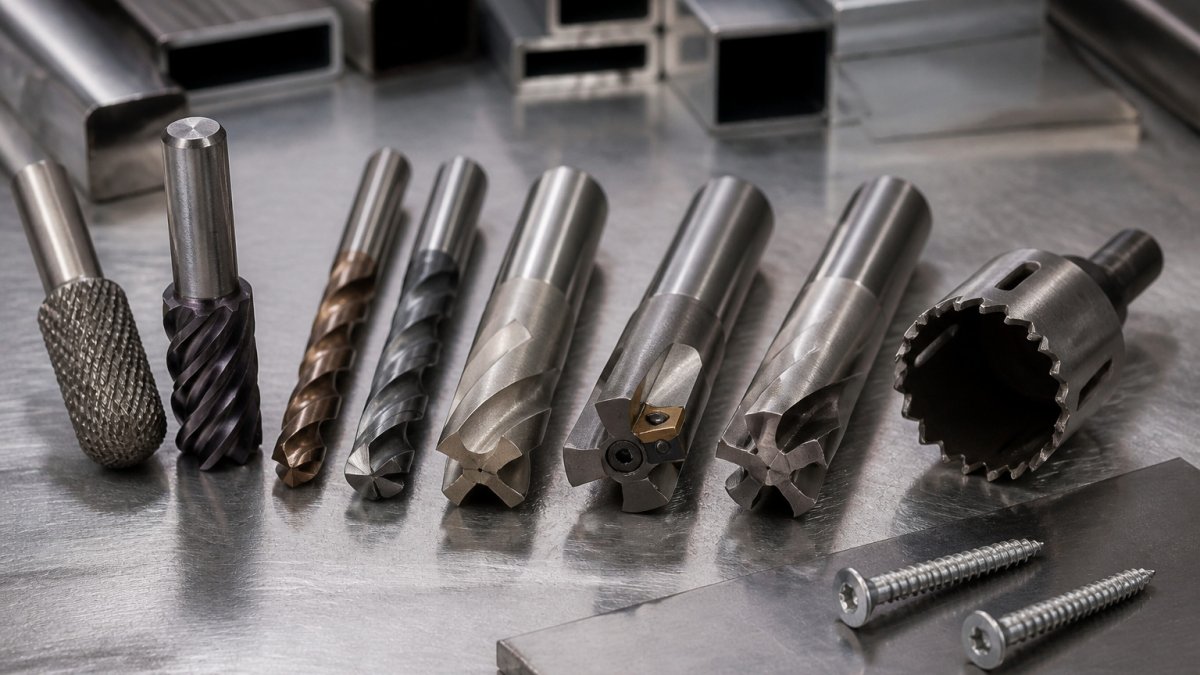
Milling cutters remove material to shape slots, pockets and profiles, and they are where tool geometry matters most. Carbide and high-speed steel (HSS) cutters both appear in stainless work. HSS is tougher on shock loads, while carbide holds its edge longer and tolerates higher speeds.
Choose a cutter with sharp edges and suitable coatings, and run it at speeds and feeds recommended for the grade. Too slow and the tool rubs and work-hardens the surface; too fast and it wears quickly. A common approach is to start conservatively, then increase feed while listening for a steady cut and checking the chip colour.
Carbide Cutting Tools for Stainless Steel: Grades, Geometry and Tool Life
Carbide tooling is the usual choice when precision and repeatability matter, but it only performs well when the geometry suits the grade. Positive rake angles and sharp cutting edges reduce cutting forces, which limits work-hardening and heat. Chipbreaker design also matters, because stainless produces tough, stringy chips that can recut the surface if they are not broken cleanly.
Grade matters as much as geometry. Austenitic grades such as SUS304 and SUS316L work-harden quickly, so a light rub with a dull edge will harden the surface and shorten tool life. Ferritic grades cut more freely but can be gummy, while duplex grades combine high strength with reasonable machinability if you keep the cut continuous. For austenitic work, a common pattern is to start with a conservative surface speed, then increase feed until the chip breaks cleanly and the cut sounds steady. Too slow and the tool rubs; too fast and the edge wears rapidly. Coolant or lubricant must reach the cutting edge, not just the workpiece, because stainless conducts heat poorly and the edge can overheat even when the part feels cool.
Tool life depends on cutting speed, feed rate and depth of cut, plus how well the coolant or lubricant reaches the edge. Heavier cuts shorten life quickly, so take lighter passes where you can. Watch for signs of wear: a polished flank, a change in chip colour or a rise in cutting noise all suggest the edge is dulling. Consider the total cost of a tool rather than its unit price: a cheaper tool that dulls after a short run often costs more per part than a well-specified carbide tool. Keep a log of what works for each grade and form, because stainless grades vary between suppliers and consistency saves time.
Choosing Your Next Stainless Steel Cutting Tool from Swiftfix
Start by identifying the grade, the form (sheet, bar, tube or profile) and the operation (cut, mill or finish). Then match the tool family from the table above, check the diameter, thickness or capacity range, and confirm the tool is rated for stainless. Keep a record of what works, because stainless grades vary between suppliers and consistency saves time.
If you are unsure which tool suits your material, send us the grade, dimensions and the job you need to do, and we can point you to the right category. Pricing depends on quantity, specification and delivery, so check the current price and stock on our website or request a quote before you order. Explore the Swiftfix range to compare cutting discs, pipe cutters, milling cutters and carbide tooling for your next job.
Frequently Asked Questions
What is the best tool to use to cut stainless steel?
There is no single best tool. The right choice depends on the form and thickness of the stainless steel and the cut you need. Cutting discs suit quick straight cuts on bar and sheet, pipe cutters give clean square ends on tube, and carbide or HSS milling cutters handle profiles and machined features. For each job, check the stainless grade, the tool's geometry and the cutting speed recommended by the tool supplier. Matching these to the job matters more than choosing a brand.
Can carbide cut stainless steel?
Yes. Carbide is widely used for machining stainless steel because it holds an edge at the higher temperatures stainless generates. Sharp, positive-rake carbide geometry reduces cutting forces and helps control work hardening. Coated carbide is often chosen where heat resistance and wear are important. Cutting data such as speed, feed and depth of cut should follow the tool manufacturer's guidance for the specific grade being machined.
Can you use a standard metal-cutting blade on stainless steel?
Not always. Stainless steel work-hardens and generates heat, so a blade made for mild steel can dull quickly and glaze the cut. Use blades and discs specified for stainless steel where possible, and avoid forcing the cut. Reduce feed pressure, keep the tool moving steadily, and check the blade or disc for wear before each job. Where cut quality matters, plan for deburring and finishing after cutting.
What should you consider when choosing a cutting tool for stainless steel?
Start with the stainless grade, the form of the material (sheet, bar, tube or profile), the thickness and the required finish. Then check the tool type, its material and coating, and the cutting parameters the supplier recommends. Consider tool life and total cost rather than unit price alone, since a tool that lasts longer can reduce downtime and replacement stock. Confirm that the tool matches your machine's power and speed range.