 How-to
How to Identify 316 Stainless Steel: Test Methods Compared
Last Updated: November 5, 2026
Quick Summary
The most reliable way to identify 316 stainless steel is a test rather than a visual check, because 316 and 304 look almost identical. A magnet can rule out mild steel, but confirming the grade needs a chemical spot test or a portable XRF or laboratory analysis.
- A magnet check rules out obvious mild steel but cannot confirm 316.
- Cold-worked 316 can attract a magnet, so a weak pull does not prove the grade.
- Chemical spot tests look for molybdenum, which 316 contains and 304 does not.
- A portable XRF analyser gives an elemental readout in seconds and is the most reliable field method.
- For critical jobs, let the lab or XRF result decide the grade, not the magnet.
Table of Contents
- Why 316 Stainless Steel Is Harder to Spot Than You Think
- Stainless Steel Magnet Test: What It Can and Cannot Tell You
- How to Test Stainless Steel Step by Step: 316 vs 304 and Portable XRF Testing
- Frequently Asked Questions
Why 316 Stainless Steel Is Harder to Spot Than You Think
Telling 316 stainless steel from 304 by eye is close to impossible, both look bright, silver and clean. To identify 316 stainless steel reliably, you need a test, and the right test depends on the job.
The difference lies in the chemistry. 316 contains molybdenum, which improves resistance to salt and chloride attack. Stock from British Stainless Steel Association guidance on austenitic grades explains the grades in more detail. Grade 316 looks the same on the shelf, so the proof must come from a test or from the supplier's paperwork.
Here is why it matters: marine fixings in 304 can pit faster near saltwater, roofing and external fixings face rain and pollution, and mixing grades can cause galvanic corrosion.
For a reference point, see our range of a2 stainless steel round wire nails.
Stainless Steel Magnet Test: What It Can and Cannot Tell You
A magnet is the quickest first check. Hold a strong magnet against the fixing: most 316 stainless steel is non-magnetic or only very weakly magnetic, while many 304 batches show slight magnetism after cold working.
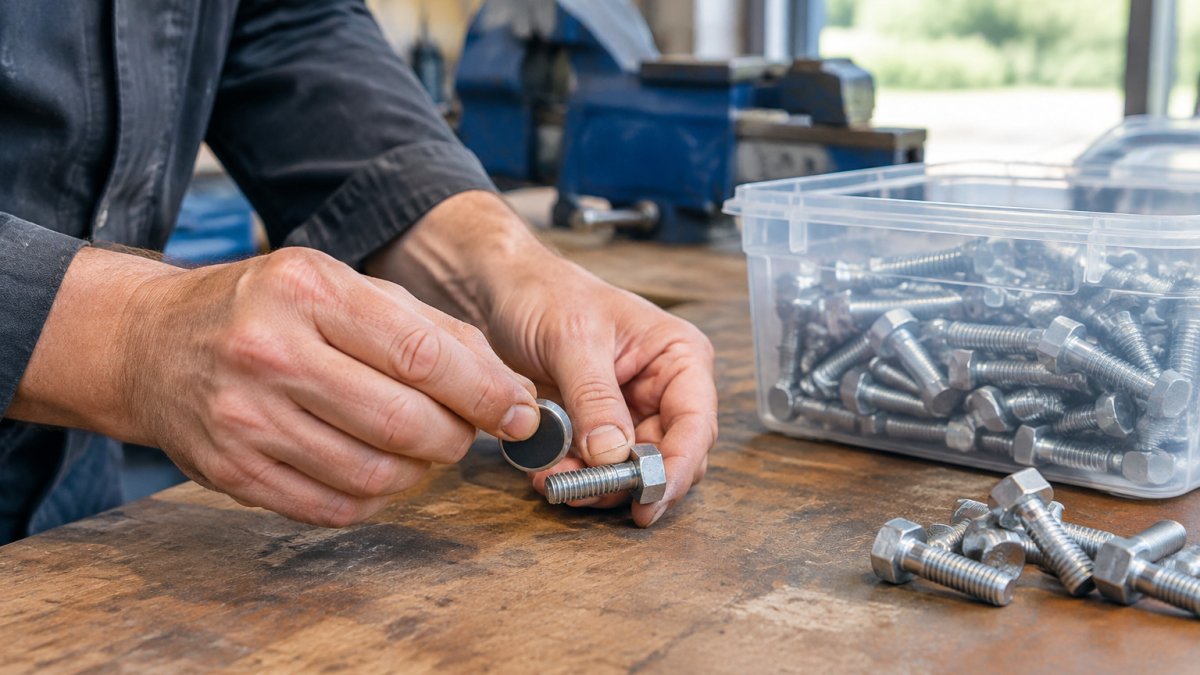
Keep the limits in mind: cold-worked 316 can attract a magnet, a weak pull does not prove the grade, and a magnet cannot separate 316 from 304 reliably.
Use the magnet test to rule out obvious mild steel, not to confirm 316. Confirmation needs a chemical or elemental test.
How to Test Stainless Steel Step by Step: 316 vs 304 and Portable XRF Testing
Work through these steps in order:
- Run the magnet check on a clean, bare surface.
- Use a chemical spot test for molybdenum, following the reagent maker's safety sheet.
- Compare the reaction against a known 304 sample.
- For certainty, send samples for a portable XRF or laboratory analysis.
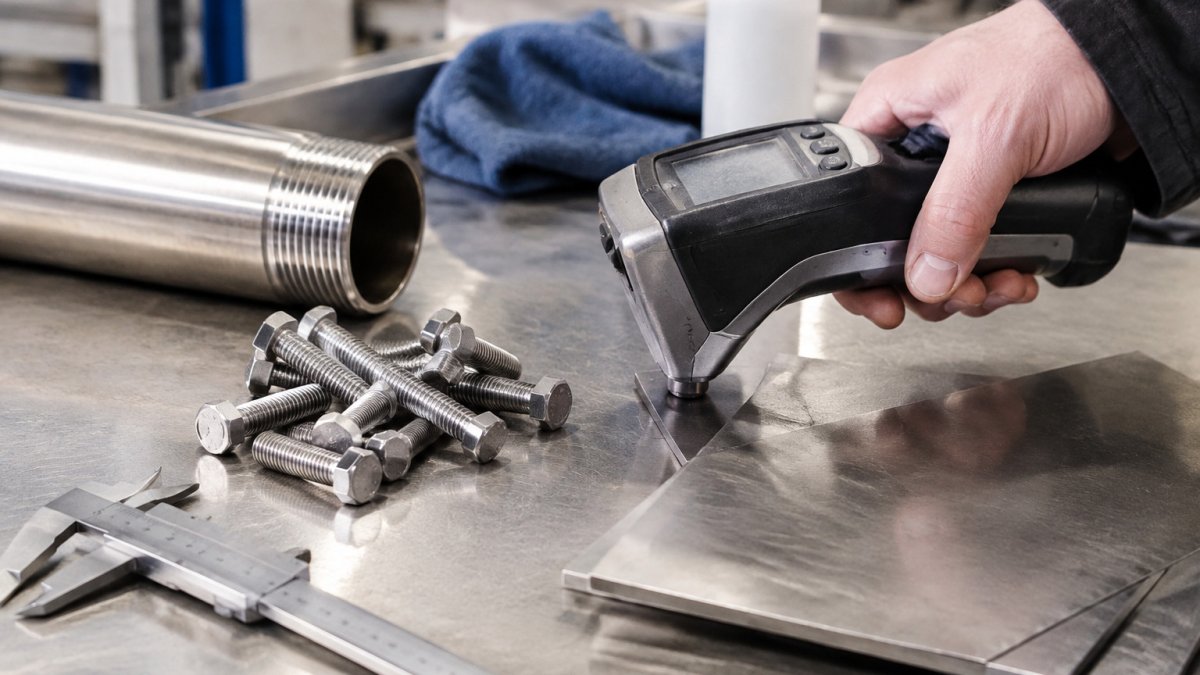
A portable XRF analyser gives an elemental readout in seconds and is the most reliable field method. If you are identifying a2 stainless steel fixings for a critical job, the lab or XRF result should decide the grade, not the magnet.
Frequently Asked Questions
How can I tell if stainless steel is 316 or 304?
A magnet alone cannot separate 316 from 304, because both are austenitic and usually read as non-magnetic. The reliable difference is molybdenum, which 316 contains at around 2 to 3 per cent and 304 does not. Confirming this needs a chemical spot test for molybdenum or a portable XRF analyser, and the supplier's mill certificate should match the result. Check the markings and certificate first, then verify with a test where the job depends on the grade.
Can a magnet identify 316 stainless steel?
A magnet can rule some material out, since most stainless steel is non-magnetic and a strong pull suggests a ferritic or martensitic grade or plain steel. However, a weak or absent response does not prove the metal is 316, because cold working can make austenitic steels slightly magnetic and 304 behaves the same way. Treat the magnet test as a quick first screen only, and follow it with a chemical or elemental test before relying on the grade.
Does 316 stainless steel rust?
316 stainless steel resists rust far better than 304, particularly in chloride environments such as coastal air, marine splash zones and de-icing salt. Its molybdenum content improves resistance to pitting corrosion. It is not rust-proof, though: contamination from carbon steel tools, poor surface preparation or prolonged chloride exposure can still cause staining or corrosion. For marine fixings, specify 316 and keep the surface clean during fitting.