 how-to
How to Select M16 Stainless Bolts 200mm Thread
Last Updated: October 26, 2026
Quick Summary
M16 stainless bolts are a common choice for construction and marine projects, offering excellent corrosion resistance and durability. An M16 x 200 mm bolt has a 16mm diameter with 200mm thread length, suitable for applications requiring deep penetration or joining multiple materials.
- M16 bolts have a metric diameter of 16 millimetres with standard thread pitch of 2mm
- A4 stainless steel grade is required for marine and coastal environments due to superior chloride corrosion resistance
- DIN 931 standard ensures thread typically covers the lower two-thirds of a 200mm bolt shaft
- Fully threaded bolts suit through-bolting with nuts and high-vibration environments
- Confirm grade, thread type, thread pitch and quantity before ordering from your supplier
Table of Contents
- Understanding M16 Stainless Bolts and Their Specifications
- DIN 931 M16 Bolt Thread Length Standards
- Comparing M16 A2 Stainless Steel Bolt and M16 A4 Stainless Steel Bolt Grades
- M16 x 200 mm Fully Threaded Bolt: When and Why to Choose It
- Selecting the Right M16 Bolt for Your Application
- Ordering Your M16 Stainless Bolts from Swiftfix
- Frequently Asked Questions
Understanding M16 Stainless Bolts and Their Specifications
M16 stainless bolts are a common choice for construction and marine projects. They offer excellent corrosion resistance and durability. Understanding the specifications ensures you select the right fastener for your application.
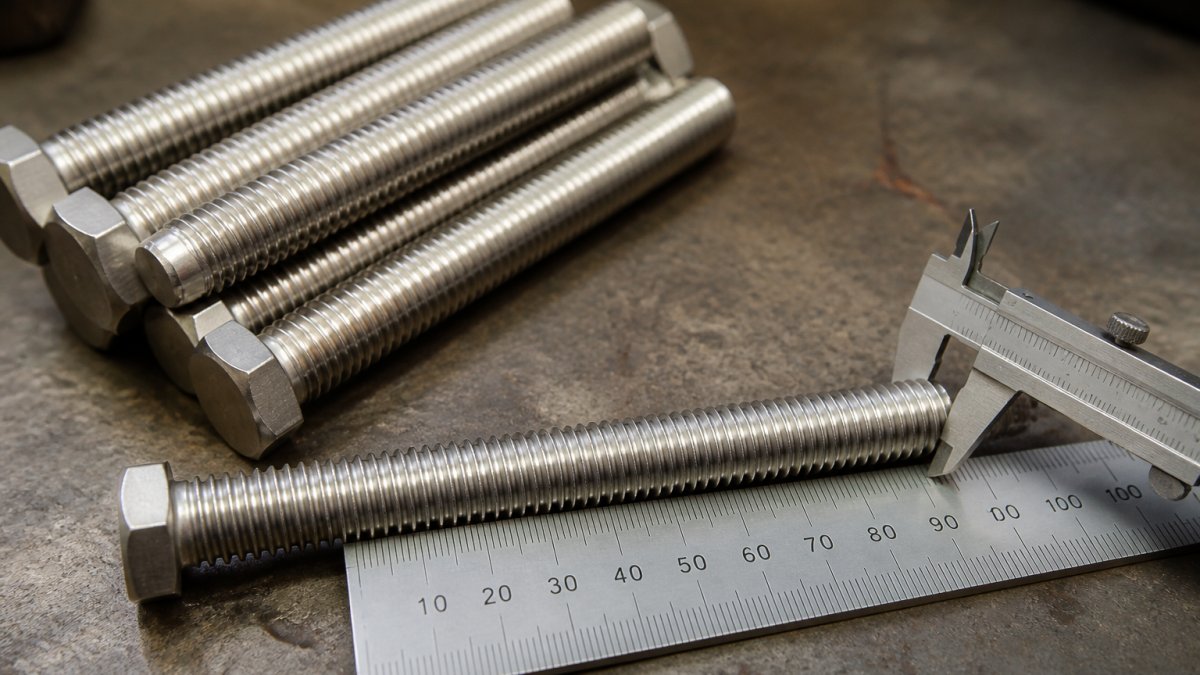
The "M16" designation refers to the bolt's metric diameter of 16 millimetres. The specifications that follow, thread pitch, length, and grade, determine how the bolt performs in your specific project. Getting these details right prevents costly failures and project delays.
What M16 x 200 mm Means
An M16 x 200 mm bolt has a 16mm diameter and a 200mm thread length. The thread runs for 200 millimetres along the bolt's shaft. This length is particularly useful for applications requiring deep penetration or where multiple materials need joining.
The 200mm thread length sits in the middle range. Shorter bolts work for thin materials. Longer bolts handle thick assemblies or layered construction. Your material thickness and the number of components being fastened determine whether 200mm is appropriate for your job.
Thread Pitch and Its Importance
Thread pitch is the distance between each thread ridge. For M16 bolts, the standard pitch is 2mm. This means each complete rotation of the bolt advances it 2mm into the material.
A finer pitch (like 1.5mm) grips more aggressively and resists vibration better. A coarser pitch (like 2mm) allows faster installation. For marine environments and structural work, the standard 2mm pitch balances ease of installation with holding strength. Most suppliers stock M16 bolts with 2mm pitch as the default, which suits most construction applications.
DIN 931 M16 Bolt Thread Length Standards
DIN 931 is the German industrial standard that defines bolt dimensions and tolerances. This standard ensures consistency across suppliers and markets. When you order an M16 bolt to DIN 931 specifications, you know exactly what you're getting.
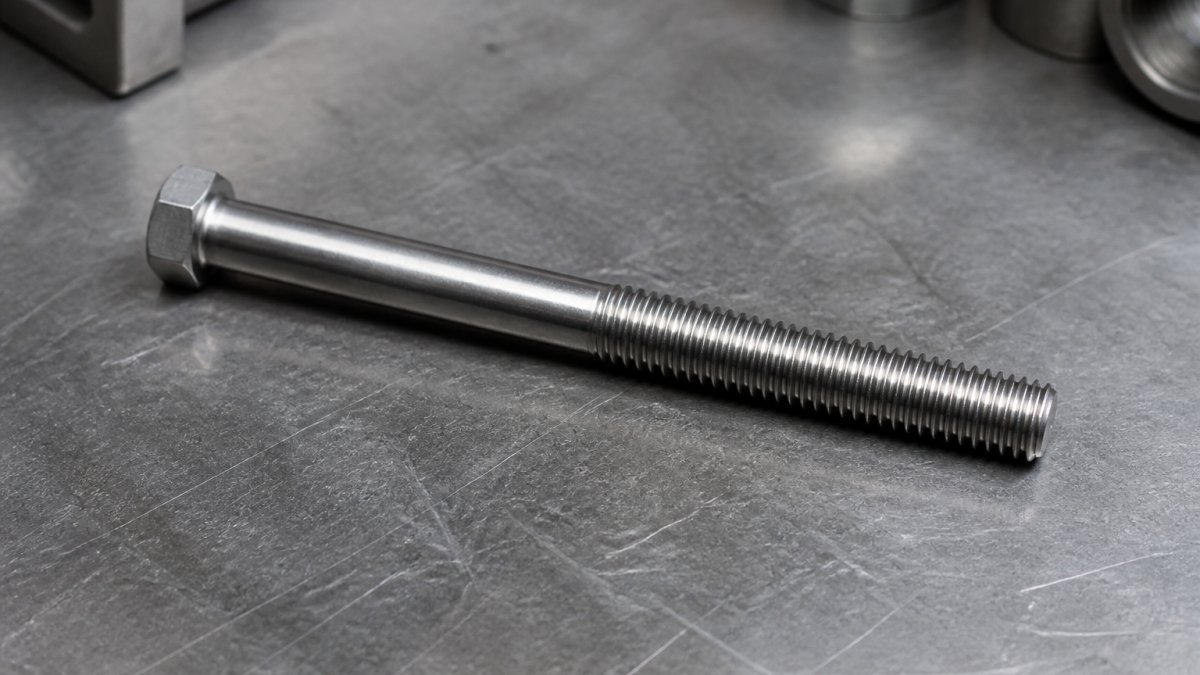
DIN 931 establishes that thread length depends on the bolt's total length. For shorter bolts (up to 125mm), the thread covers most of the shaft. For longer bolts, including 200mm lengths, the thread typically covers the lower two-thirds of the shaft. The remaining upper third remains unthreaded, providing a smooth bearing surface under the bolt head.
This design matters in practice. The unthreaded section prevents damage to threaded holes when the bolt is inserted. It also reduces stress concentration where the thread begins. Bolts that deviate from DIN 931 can cause installation problems or premature failure.
When sourcing M16 bolts, confirming DIN 931 compliance ensures compatibility with standard washers, nuts, and threaded holes. Most construction professionals expect DIN 931 compliance as a baseline. Deviations from this standard should be flagged and justified before purchase.
Comparing M16 A2 Stainless Steel Bolt and M16 A4 Stainless Steel Bolt Grades
Stainless steel grades determine corrosion resistance and strength. A2 and A4 are the two most common grades for construction fasteners. Understanding the difference helps you avoid costly material failures.
A2 stainless steel contains 18% chromium and 8% nickel. It resists general corrosion well in most indoor and dry outdoor environments. A2 bolts handle typical construction work, roofing, and general fabrication. They're affordable and widely available.
A4 stainless steel (also called 316 stainless) adds molybdenum to the A2 base. This addition dramatically improves resistance to chloride corrosion. A4 bolts survive in marine environments, coastal areas, and salt-spray conditions where A2 would pit and fail. The added molybdenum makes A4 more expensive than A2, but the cost difference is justified when corrosion risk is high.
Cost and availability: A2 bolts are cheaper and easier to source. A4 bolts cost more but last significantly longer in harsh environments.
Strength: Both grades offer similar tensile strength. A4 isn't stronger, it's more corrosion-resistant.
Application: Use A2 for indoor work and protected outdoor settings. Use A4 for marine, coastal, or salt-exposed projects.
M16 A4 Stainless Steel Bolt for Marine Applications
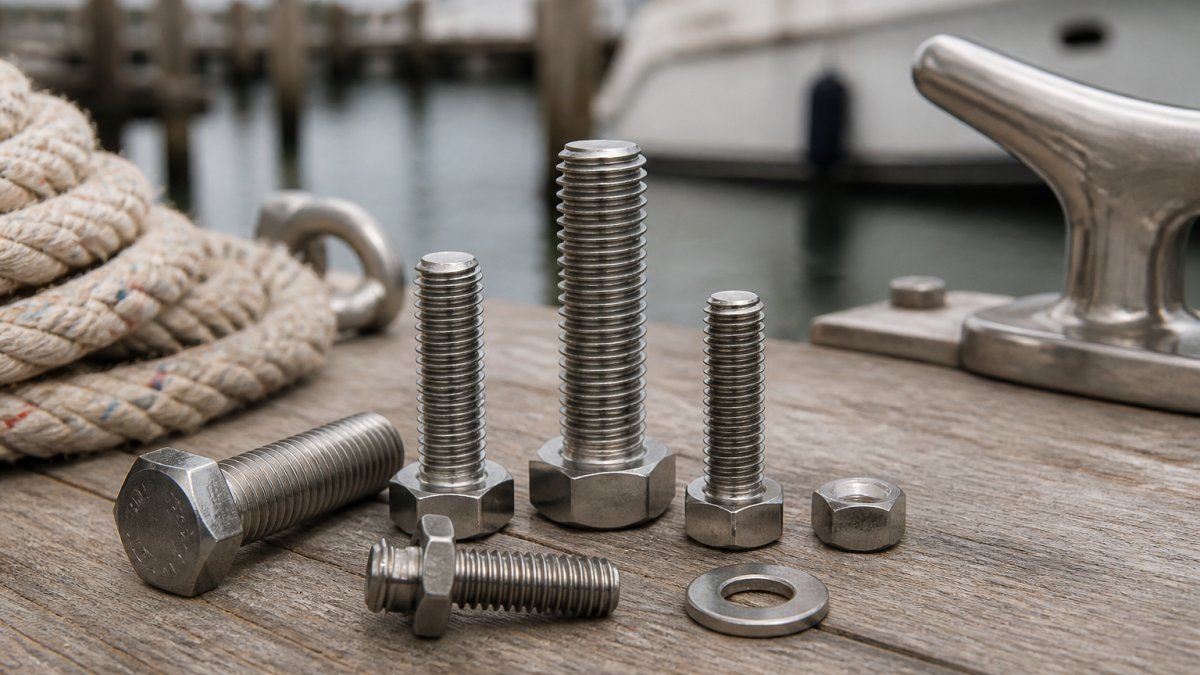
Marine environments demand A4 stainless steel. Saltwater, salt spray, and high humidity accelerate corrosion in lesser materials. A4 bolts resist these conditions far better than A2, making them essential for boat building, dock construction, and coastal projects.
The British Standards Institution guidance on stainless steel fasteners confirms that A4 (316 stainless) is the minimum standard for marine fastening. Projects that ignore this recommendation face premature failure and expensive repairs.
When specifying M16 A4 stainless bolts for marine use, confirm the supplier's certification. Not all "stainless" bolts meet A4 standards.
You can browse the marine-grade fastening solutions to see how A4 stainless bolts compare with other marine-grade options for your specific project needs.
A2 and A4 stainless steel grades offer different levels of corrosion resistance and cost.
| Grade | Composition | Best for | Key advantage |
|---|---|---|---|
| A2 | 18% chromium, 8% nickel | Indoor and dry outdoor work | Cheaper and widely available |
| A4 | A2 base plus molybdenum | Marine and coastal environments | Superior chloride corrosion resistance |
M16 x 200 mm Fully Threaded Bolt: When and Why to Choose It
A fully threaded M16 bolt has thread running along the entire shaft, from the head to the tip. This differs from partially threaded bolts, which have an unthreaded section below the head.
When to use fully threaded: Through-bolting with nuts, maximum grip in thin materials, high-vibration environments.
When to avoid: Deep hole tapping, applications where smooth insertion matters, or when you want to reduce installation torque.
Selecting the Right M16 Bolt for Your Application
Choosing the correct M16 bolt requires assessing five factors: corrosion environment, load type, material thickness, installation method, and vibration exposure.
Corrosion environment: Saltwater and coastal settings demand A4. Protected indoor work accepts A2. Outdoor dry settings typically use A2 unless salt spray is present.
Load type: Tensile loads (pulling apart) require high-strength bolts. Shear loads (sideways forces) need good grip. Torsional loads (twisting) benefit from fine thread pitch.
Material thickness: Thin materials (under 10mm) work better with fully threaded bolts. Thick assemblies often use partially threaded bolts to reduce insertion friction.
Installation method: Hand tools require lower torque, favouring partially threaded designs. Power tools can handle fully threaded bolts more easily.
Vibration exposure: High-vibration environments (machinery, vehicles) benefit from fine thread pitch and fully threaded designs that resist loosening.
A common mistake is treating all stainless bolts as equivalent. They're not. A2 and A4 perform very differently in salt environments. Fully threaded and partially threaded bolts behave differently under load. Thread pitch affects vibration resistance. Matching these specifications to your actual conditions prevents project failure and rework.
Ordering Your M16 Stainless Bolts from Swiftfix
Once you've determined your specifications, ordering is straightforward. Start by confirming these details:
- Exact diameter and length (M16 x 200 mm)
- Grade (A2 or A4)
- Thread type (fully or partially threaded)
- Thread pitch (standard 2mm or fine 1.5mm)
- Quantity and delivery timeline
Document these specifications before contacting a supplier. This prevents miscommunication and ensures you receive exactly what you need. Providing clear specifications also helps suppliers give accurate pricing and delivery estimates.
You can view M16 Coach Bolts and other M16 options to explore the specific M16 bolt types available and confirm your exact requirements before placing an order.
Frequently Asked Questions
What does M16 x 200 mm mean on a bolt?
M16 x 200 mm describes the bolt's diameter and overall length. M16 means the bolt has a 16 mm nominal diameter, whilst 200 mm is the total length from the underside of the head to the end of the bolt. This specification ensures you select the correct size for your application, whether for structural fastening or marine work.
What is the difference between A2 and A4 stainless steel bolts?
M16 A2 stainless steel bolts offer good corrosion resistance for general construction work and indoor applications. M16 A4 stainless steel bolts provide superior corrosion resistance and are specifically designed for marine environments and harsh outdoor conditions. A4 grade contains molybdenum, making it significantly more resistant to chloride corrosion, which is essential for coastal and saltwater projects.
How much of an M16 x 200 mm bolt is threaded?
On an M16 x 200 mm partially threaded bolt, typically 100-120 mm of the shaft is threaded, with the remainder being a smooth shank. However, M16 x 200 mm fully threaded bolts have threading that extends nearly the entire length, providing maximum holding power. The exact thread length depends on whether you choose a partially or fully threaded variant and the specific DIN standard.
Can stainless steel bolts be used outdoors or in marine environments?
Yes, stainless steel bolts are excellent for outdoor and marine use. A2 grade works well for general outdoor exposure, whilst A4 grade is specifically engineered for marine environments and coastal areas where salt spray and moisture accelerate corrosion. Always ensure you select the appropriate grade for your environmental conditions to guarantee long-term durability and safety.
Selecting the right M16 stainless bolt isn't complicated once you understand the specifications. The grade you choose (A2 or A4) determines how long your fasteners last in your environment. The thread design affects installation ease and load capacity. At Swiftfix Distributors Ltd, we stock M16 bolts in the grades and configurations that construction professionals actually use. Get in touch with our team to confirm your specifications and place your order.