 Listicle
7 Heavy Duty Timber Screws Compared for Structural Work
Last Updated: November 19, 2026
Quick Summary
Heavy duty timber screws are built to carry loads that standard wood screws cannot, with a larger core, aggressive thread and a head that takes high torque. Choose one by load rating, timber type, coating for the environment and whether a second layer such as insulation needs a dual-threaded design.
- Check screw length and embedment depth against the job specification, not a rule of thumb.
- Dual-threaded warm roof screws grip timber on both sides of the insulation without crushing it.
- Hot-dip galvanised screws suit coastal and marine timber better than standard coatings.
- Use a screw with a verified load rating for any critical structural connection.
- Confirm screw suitability for thin plywood before using a dual-threaded design there.
Table of Contents
- Why Heavy Duty Timber Screws Differ From Standard Wood Screws
- How Thread Geometry Affects Load and Grip
- Comparison Table: 7 Heavy Duty Timber Screws at a Glance
- Structural Timber Screws for Framing and Load-Bearing Builds
- Double-Threaded Warm Roof Screws: Why the Two Threads Matter
- Timber Screw Length and Embedment: Getting the Depth Right
- Coatings and Corrosion: Choosing for Marine and Coastal Timber
- How to Choose the Right Heavy Duty Timber Screw for Your Application
- Ordering the Right Timber Screws From Swiftfix
- Frequently Asked Questions
Why Heavy Duty Timber Screws Differ From Standard Wood Screws
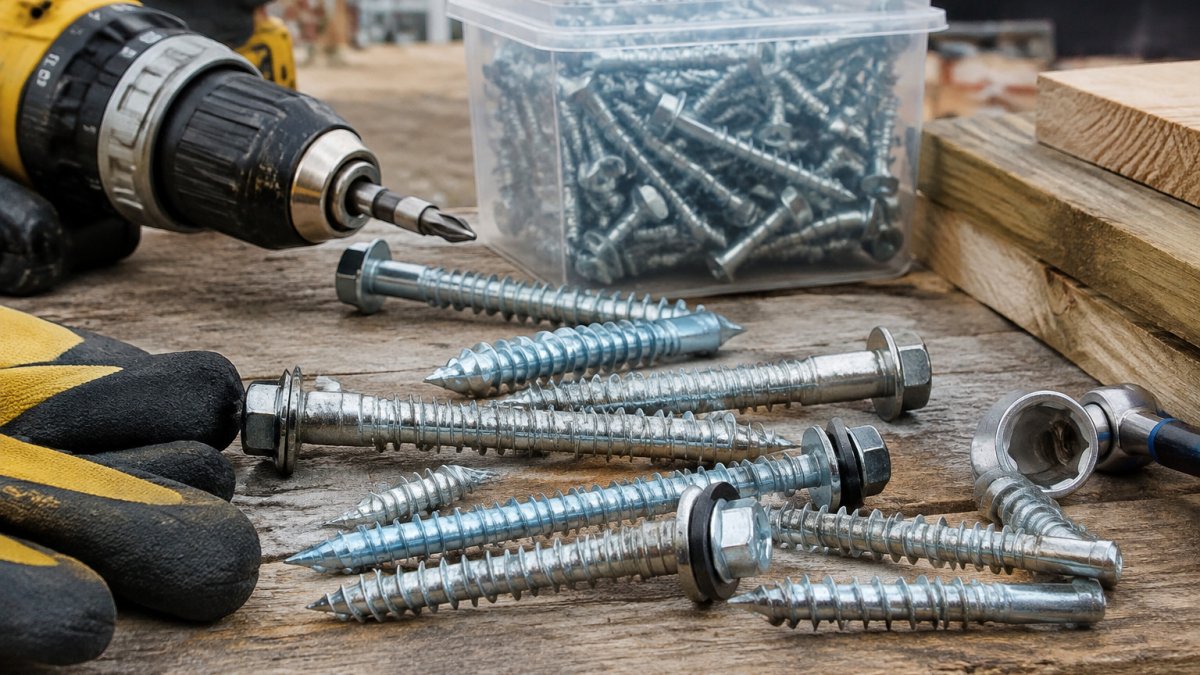
Heavy duty timber screws are built for loads that a standard wood screw was never designed to carry. Swiftfix Distributors Ltd supplies many of these fixings, from short structural screws to long, large-diameter types for framing and roof work. Knowing how they differ from everyday wood screws helps you pick the right one first time.
A standard wood screw usually has a single thread, a modest diameter and a shank that is relatively thin. Heavy duty timber screws typically have a larger core, a more aggressive thread and a head designed to take high torque from an impact driver. They are made to pull two pieces of timber together and hold them under sustained load.
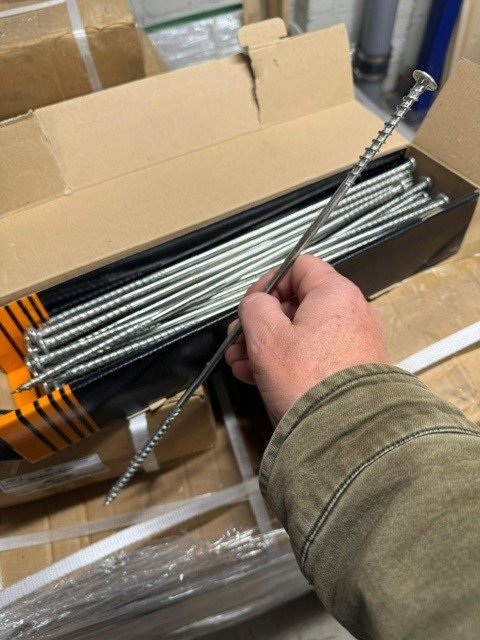
Many structural jobs also need a screw long enough to reach through one member and deep into the next. Length and embedment depth matter as much as diameter, so always check both against the job specification.
How Thread Geometry Affects Load and Grip
Thread geometry decides how a timber screw bites, pulls and holds. Thread pitch, thread depth and the shape of the point all change how the screw behaves in dense or soft timber.
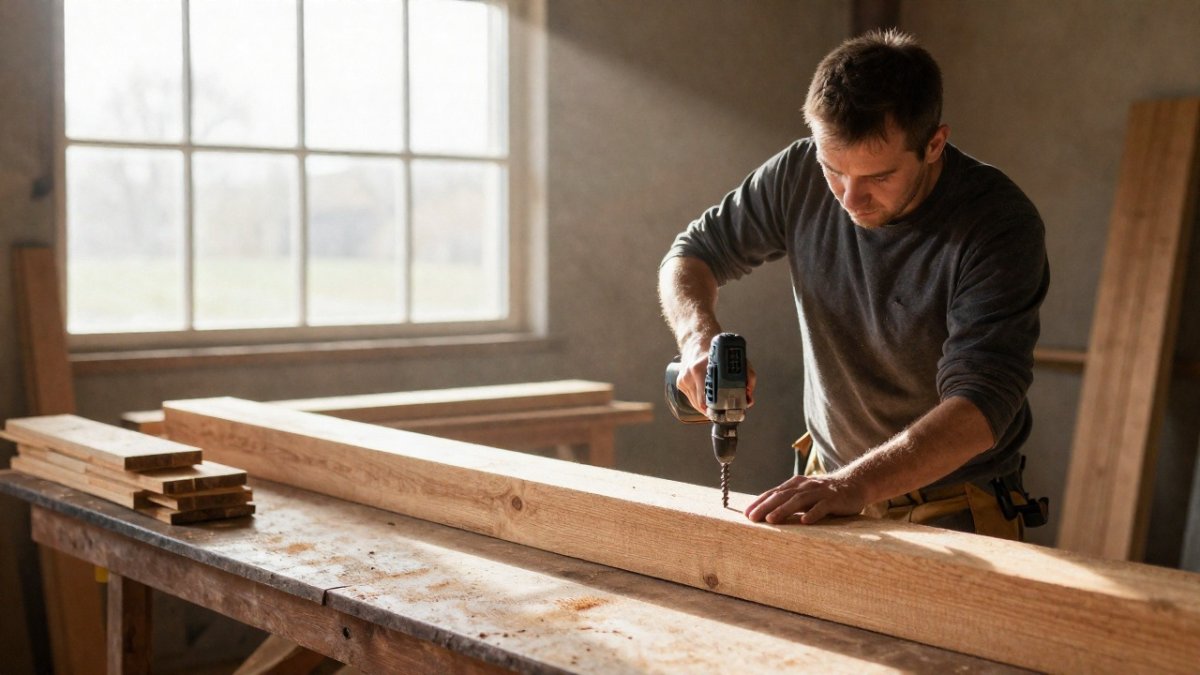
A coarse thread with a deep profile tends to grip softer timber quickly and resist withdrawal. A finer thread can suit dense hardwoods, where it cuts cleanly without splitting the wood. The point matters too: a sharp, self-drilling tip reduces the need for pilot holes, while a blunt point may require one in hardwood.
Some screws add a second thread along the shank, often called a dual-threaded or double-threaded design. The purpose is to draw two members together without crushing material between them. We explain that design in its own section below.
Comparison Table: 7 Heavy Duty Timber Screws at a Glance
The table below summarises seven heavy duty timber screws from the range we have reviewed. Prices are not shown because pricing depends on quantity, dates and delivery. Check the product page on the Swiftfix Distributors Ltd website for a current price or quote.
| Screw | Thread Design | Best For | Coating | Drive Type |
|---|---|---|---|---|
| Eurotec Topduo | Dual-threaded | Warm roof insulation | Standard | Flanged button head |
| Simpson Strong-Tie SDWS | Single, SawTooth point | Ledgers, beams | Corrosion-resistant options | Structural drive |
| Spax Construction Screw | 4CUT point | Framing, heavy joinery | Wirox coating | T-Star plus |
| Rawlplug Procut | Rapid-bite thread | Load-bearing builds | Standard | Reinforced head |
| TimberLok Heavy-Duty | Sharp point | Decking, fencing | Standard | Countersink head |
| Simpson Strong-Tie SDWH | Deep thread | Coastal, marine timber | Hot-dip galvanised | Hex head |
| Kryonix Structural | Structural grade | Outdoor structures | 4-layer epoxy | Star Torx |
Each option suits a different job. A hot-dip galvanised hex head is a sensible choice near the coast, while a dual-threaded warm roof screw is the right tool for insulated roof build-ups.
Structural Timber Screws for Framing and Load-Bearing Builds
Structural timber screws are chosen for their ability to carry load over the life of a building. For framing and load-bearing work, the screw should have high withdrawal strength, a strong head and a thread that engages deep into the receiving member.
Simpson Strong-Tie SDWS screws are often used as an alternative to lag screws and through-bolting in timber-to-timber connections. Their SawTooth point lets them start without pre-drilling in most applications, which saves time on site. Spax construction screws, with their 4CUT point and T-Star plus drive, are a strong choice where driveability in dense timber matters.
Where a load path depends on a connection, confirm the screw's rating against the design calculation before you buy. We recommend checking the manufacturer's data sheet for the exact grade and coating.
Double-Threaded Warm Roof Screws: Why the Two Threads Matter
Double-threaded warm roof screws, also called insulation screws, have a thread near the tip and a second thread beneath the head. The two threads grip the timber on either side of the insulation, helping hold it at the correct spacing without crushing the insulation between them.
Each part has a different job. The thread near the tip anchors into the supporting timber below the insulation, typically a rafter or joist. The smooth middle section passes through the insulation layer. The thread beneath the head grips the upper timber, usually a counter batten, and maintains its position above the supporting structure.
This arrangement lets roof loads transfer through the screws into the supporting timber, reducing reliance on the insulation to carry those loads. That matters with softer insulation, which can compress under pressure. An ordinary long screw with a smooth shank tends to pull the upper timber towards the lower timber as you tighten it, compressing the insulation. The upper thread helps restrain that movement.
For plywood decks, check the screw's suitability carefully. The upper thread needs enough engagement in the upper timber, so a screw designed for a substantial counter batten should not be assumed suitable for thin plywood. Screw length, thread positions, embedment, spacing and installation angle must suit the roof build-up and the manufacturer's design guidance. Eurotec's Topduo flanged button head is one example of a product built around this principle.
Timber Screw Length and Embedment: Getting the Depth Right
Screw length is one of the most common errors on site. A screw that is too short will not reach enough timber to develop its rated strength, while one that is too long can break through the far side or interfere with other members.
Embedment is the depth the threaded portion penetrates the receiving timber. As a general rule, the thread should engage well into the supporting member, not just graze its surface. The exact requirement depends on the timber species, the load and the manufacturer's guidance, so do not rely on a rule of thumb for critical connections.
Measure the total thickness of the materials you are fixing through, then add enough length for the required embedment in the receiving timber. Keep spacing and edge distances within the manufacturer's recommendations to avoid splitting.
Coatings and Corrosion: Choosing for Marine and Coastal Timber
Coating choice has a large effect on how long a screw lasts outdoors. Salt air, damp and treated timber all accelerate corrosion, so the coating should match the environment.
Hot-dip galvanised screws, such as the Simpson Strong-Tie SDWH, offer strong protection for coastal and marine timber. Epoxy-coated screws, like the Kryonix structural range, provide good rust resistance for permanent outdoor structures. Corrosion-resistant finishes suit pressure-treated timber, though you should confirm compatibility with the treatment type.
For marine work, many builders also consider 316 stainless steel fixings. Swiftfix stocks a broad range of construction and marine fixings, so you can match the coating to the exposure rather than compromising on durability.
How to Choose the Right Heavy Duty Timber Screw for Your Application
Choosing a heavy duty timber screw starts with the job, not the product. Work through these questions in order:
- What is the load? Structural connections need screws with a verified load rating. Non-critical fixings can use a more economical option.
- What is the timber? Softwoods, hardwoods and treated timber each call for different thread and point designs.
- What is the environment? Interior, exterior, coastal and marine locations need different coatings.
- Is there a second layer? Insulation, battens or plywood may call for a dual-threaded design.
- What length and diameter are needed? Confirm embedment depth and check the manufacturer's spacing rules.
We would avoid using a general-purpose construction screw for a critical structural connection, even where it looks similar. Matching the screw to the specification avoids costly rework later.
Ordering the Right Timber Screws From Swiftfix
Ordering the right timber screws is easier when you know the exact length, diameter, coating and drive type before you buy. Swiftfix Distributors Ltd specialises in larger sizes, longer lengths and larger diameters, so specialised fixings are part of our standard range.
Before you order, check the product specification against your design, confirm the coating for the environment and note the quantity you need. Pricing depends on quantity, dates and delivery, so please visit the Swiftfix Distributors Ltd website for current prices or to request a quote.
If you are unsure which screw fits your build, contact the team before ordering. Getting the specification right first is the simplest way to avoid delays and wrong-spec deliveries.
Simpson Strong-Tie SDWS product information
Eurotec Topduo flanged button head product page
Spax construction screw product range
Rawlplug Procut timber construction screws guidance
Frequently Asked Questions
What screws are best for heavy-duty timber construction?
For structural framing, choose screws with a sharp point, a deep thread and a head rated for high torque, such as Simpson Strong-Tie SDWS or Spax construction screws. Heavy duty timber screws in corrosion-resistant coatings suit exposed work. Pricing depends on quantity, dimensions and delivery, so check Swiftfix's website for current prices or request a quote before ordering.
Do heavy-duty screws for timber need a pilot hole?
Many structural timber screws are designed to be driven without pre-drilling, particularly in softwood, because their sharp points and cutting threads reduce splitting. Hardwoods, end grain and timbers near the edge of a board are more prone to splitting, so a pilot hole is still good practice in those cases. Always check the manufacturer's guidance for the timber species and screw diameter you are using.
Which screws are suitable for fixing timber over roof insulation?
Warm roof applications typically use double-threaded screws, such as Eurotec Topduo, which have a thread near the tip to anchor into the rafter, a smooth middle section that passes through the insulation, and a thread beneath the head that grips the counter batten. This layout helps keep the insulation from being compressed. Screw length, thread positions and spacing must suit the roof build-up and the manufacturer's design guidance.
How far should a structural screw go into timber?
Embedment is the length of thread that sits in the receiving timber, and it determines how much load the screw can carry. The manufacturer's data sheet sets the minimum embedment for each screw and timber type, so match the screw length to the thickness of the top member plus the required embedment in the supporting timber. Shorter screws may look sufficient but can fall below the rated grip.