blog
Long Thread Screws for Structural Projects: UK Guide
Last Updated: November 14, 2026
Quick Summary
Long thread screws for structural projects are fixings built for heavy, load-bearing joints, with larger diameters and longer shanks than ordinary wood screws. They hold firmly under stress, so choosing the correct length, thread position and diameter matters for a lasting joint.
- Structural timber screws usually have a larger diameter, longer shank and more aggressive thread than standard wood screws.
- Length, thread position and diameter must all match the roof build-up before you order.
- Double-threaded warm-roof screws grip timber on both sides of the insulation without crushing it.
- Check that the upper thread sits wholly within the deck thickness rather than partly in insulation.
- Confirm the manufacturer's guidance covers your deck material before using a screw on thin plywood.
Table of Contents
- Why Long Thread Screws Matter in Structural Work
- Structural Timber Screws: What Sets Them Apart
- Why Have a Double-Threaded Screw?
- Choosing Structural Screw Length and Embedment
- Fully Threaded Screws for Wood: When They Suit the Job
- Checking Suitability for Plywood Decks and Thin Substrates
- Ordering the Right Long Screws for Your Next Project
- Frequently Asked Questions
Why Long Thread Screws Matter in Structural Work
Long thread screws for structural projects are designed to do a job that ordinary fixings cannot. They reach deep into the timber, hold heavy loads and stay put under stress. For builders, roofers and serious DIYers, choosing the right one is often the difference between a joint that lasts and one that loosens over time. Swiftfix Distributors Ltd supplies a range of these fixings, with a particular focus on larger diameters and longer lengths.
The main risk comes from getting the length, thread position or diameter wrong. A screw that is too short will not engage enough timber. A screw with the wrong thread can pull members out of alignment. Each choice affects how the structure carries its loads.
Structural Timber Screws: What Sets Them Apart
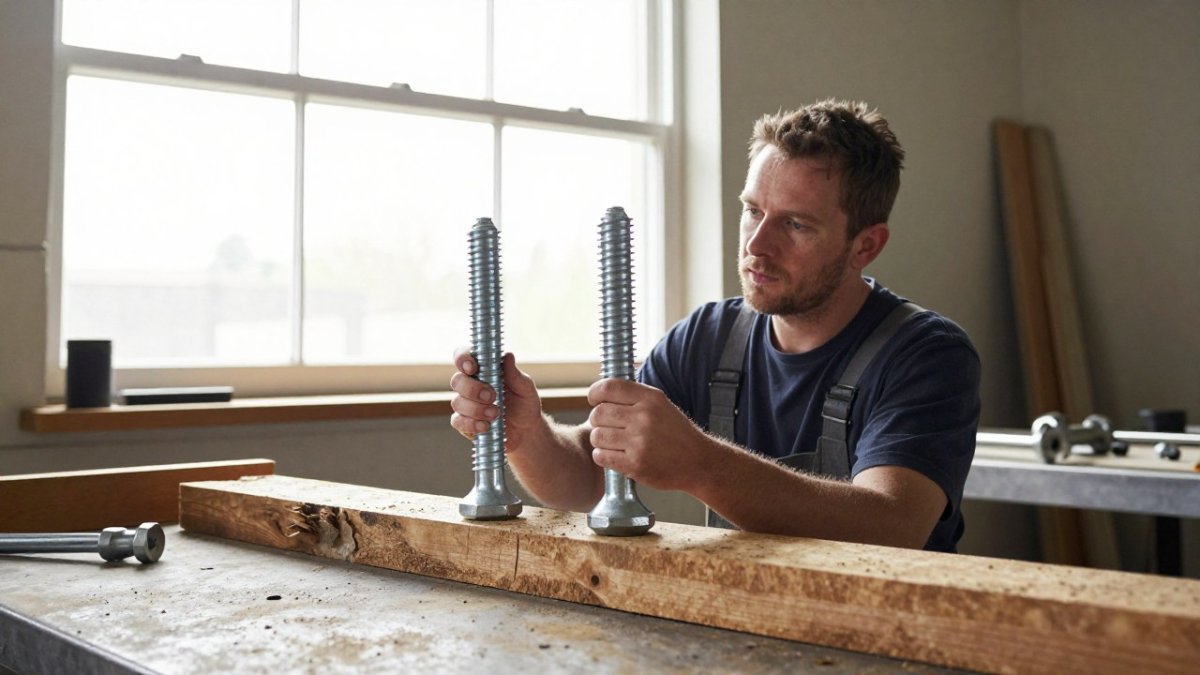
Structural timber screws are built for load-bearing joints rather than light fixing jobs. They usually have a larger diameter, a longer shank and a more aggressive thread than a standard wood screw. Many also have a flange or washer head, which spreads the clamping force and reduces the chance of the head pulling through the material.
Why Have a Double-Threaded Screw?
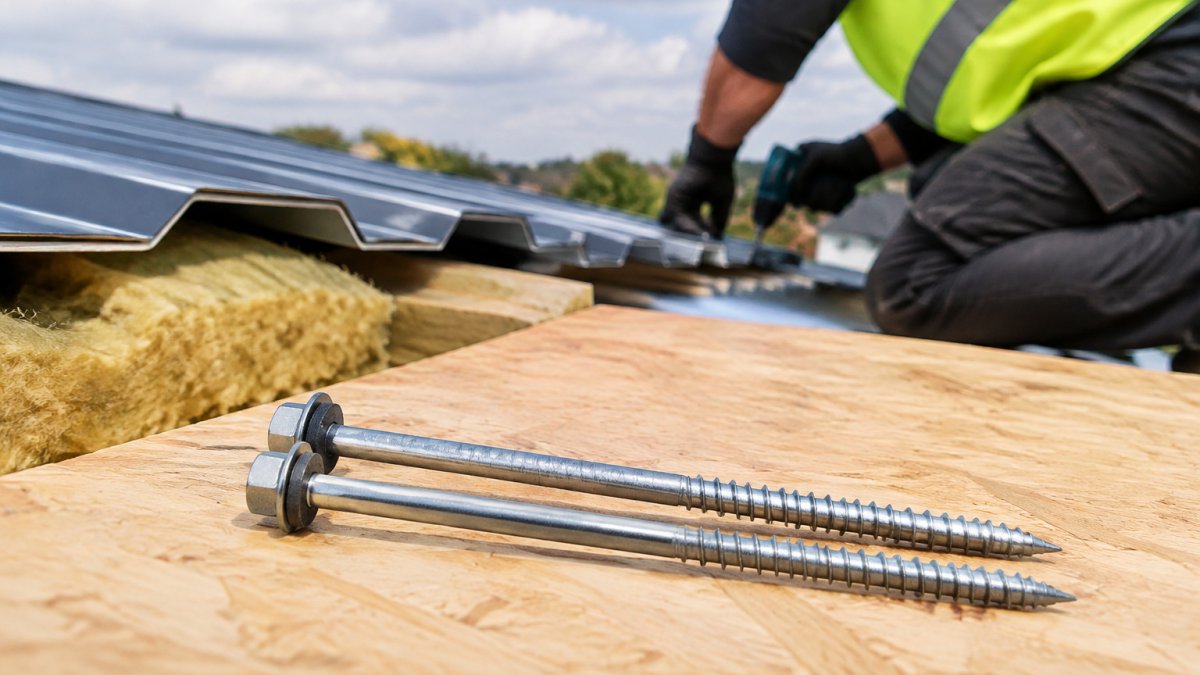
Double-threaded screws, often called warm-roof or insulation screws, are designed for roofs where insulation sits between two layers of timber. The two threads grip the timber on either side of the insulation. This holds the upper timber at the correct spacing without crushing the insulation between them.
What Each Thread and Section Does
Each part of the screw has a separate job:
Part of the screw | What it does |
|---|---|
Thread near the tip | Anchors into the supporting timber below the insulation, typically a rafter or joist |
Smooth middle section | Passes through the insulation layer |
Thread beneath the head | Grips the upper timber, usually a counter batten, and holds its position above the structure |
This arrangement lets roof loads pass through the screws into the supporting timber. It reduces reliance on the insulation to carry those loads, which matters most with softer insulation that can compress under pressure. Source details for the product design are set out by Eurotec TopDuo flanged button head screw product information. For a closer look at how these screws work in practice, see how dual threaded warm roof screws work.
Why an Ordinary Long Screw Falls Short
An ordinary screw with a smooth shank beneath the head tends to pull the upper timber towards the lower timber as you tighten it. With insulation between them, that pull can compress the insulation. The additional upper thread helps restrain this movement.
Choosing Structural Screw Length and Embedment
Sizing a warm-roof screw is not a matter of picking the longest fixing on the shelf. Three dimensions have to line up at once: the position of the lower thread, the length of the smooth middle section, and the position of the upper thread. Get any one of them wrong and the screw either fails to anchor or crushes the very insulation it is meant to protect.
Work through the build-up from the bottom upwards. Start with the rafter or joist, add the insulation thickness, then add any membrane, board or batten layers above it. The lower thread must sit wholly within the rafter, the smooth section must span the insulation, and the upper thread must sit wholly within the counter batten. If the upper thread lands partly in the insulation, it grips nothing.
A simple way to check a candidate screw is to mark the build-up on a scrap of timber at full scale. Lay the screw alongside it and confirm where each thread falls.
Embedment follows the same logic. The lower thread needs enough depth in the supporting timber to develop its holding power, and the upper thread needs enough depth in the batten to resist withdrawal. A screw designed for a substantial counter batten may have more upper thread than a thin plywood deck can use, so the thread may strip out rather than bite.
Diameter and spacing are linked. Larger diameters suit heavier loads and thicker members, but they also demand wider edge distances to avoid splitting. Spacing and installation angle should come from the manufacturer's design guidance for the specific build-up, not from a rule of thumb carried over from another job.
Watch out: a screw that is long enough overall can still be wrong if the smooth section is too short, because the upper thread will begin biting before the lower thread has fully seated.
Where the build-up is unusual, or the loads are more than routine, have the fixing schedule checked by someone competent to design it. The screw is only one part of the load path.
Fully Threaded Screws for Wood: When They Suit the Job
Fully threaded screws run the thread along the full length of the shank. They suit joints where both members need to be drawn tightly together, such as laminated timber or frames where a strong clamping action is needed.
Checking Suitability for Plywood Decks and Thin Substrates
Plywood and thin boards behave differently from solid counter battens, and the difference is mostly about how much material the upper thread has to work with. A screw designed for a substantial batten may have a long upper thread section that a thin deck cannot accommodate, so the thread strips out instead of gripping.
Before fixing, confirm four things. First, that the upper thread sits wholly within the deck thickness rather than partly in the insulation. Second, that the lower thread achieves its full embedment in the supporting timber. Third, that the head style suits the deck: a flanged or washer head spreads the clamping force and reduces pull-through on thinner boards. Fourth, that the manufacturer's guidance actually covers the deck material, not just solid timber.
Installation sequence matters as much as selection. Drive the screw squarely, keep the tool aligned with the screw axis, and stop when the upper thread is fully engaged and the head is seated. Over-driving is the most common cause of stripped threads in thin decks and of crushed insulation beneath. Where splitting is a risk near board edges, a pilot hole sized to the screw's core diameter reduces it.
Edge distances deserve a check of their own. Thin boards have less material around each fixing, so keep fixings back from board edges and joints in line with the manufacturer's guidance, and stagger them where the deck layout allows.
Specification checks are the last line of defence. Look for the technical datasheet, the declared dimensions and thread positions, the coating or stainless steel grade, and any approval or design guidance the manufacturer publishes. Match the coating to the exposure and to any timber treatment, because the wrong finish can corrode quickly in damp or treated conditions.
Watch out: a screw that performs well in a thick counter batten should not be assumed suitable for a thin plywood deck without checking the thread positions against the actual board thickness.
Where the deck forms part of a structural roof build-up, confirm the fixing schedule against the manufacturer's design guidance and, where loads are significant, take professional advice before ordering.
Ordering the Right Long Screws for Your Next Project
Start by writing down the joint details: the material thickness, insulation depth, timber species, the required length and diameter, and the head and drive type you need. Compare these against the product specification rather than the screw name alone. Pricing depends on quantity, delivery and the specification, so ask Swiftfix Distributors Ltd for a current quote on the exact fixings you need.
For wider guidance on sizing and materials, the Timber Research and Development Association guidance on timber fixings is a useful reference. Swiftfix Distributors Ltd stocks a range of structural and timber screws, so check the product pages or contact the team to confirm availability before you order.
Frequently Asked Questions
What are long thread screws used for in structural projects?
Long thread screws are used to fix timber members together where a standard short screw will not reach far enough into the supporting timber. In UK building work they are common in roof build-ups, where a counter batten has to be secured through insulation to a rafter or joist below. Builders also use them for heavy timber joints, sleeper fixings and structural frames. Because the threads grip along a greater length of timber, they can transfer loads more effectively than a smooth-shanked fixing. Always confirm the screw's load and fixing values against the manufacturer's technical documentation before use.
How do I choose the right length of structural timber screw?
Start by measuring the total thickness of the material being fixed, including any insulation or packers, then add the required embedment into the supporting timber. The screw should penetrate the receiving timber by the depth specified in the manufacturer's guidance. Check the thread positions as well, because the upper thread must engage the top timber sufficiently. Screw diameter, spacing and installation angle should also suit the build-up. Where a joint is critical, confirm the selection with the manufacturer's design guidance rather than relying on a rule of thumb.
Can structural screws be used in roof insulation build-ups?
Yes, provided the screw is designed for the purpose. Double-threaded warm-roof or insulation screws are made for fixing counter battens through insulation, with one thread anchoring into the rafter or joist below and another gripping the upper timber. This helps hold the battens at the correct spacing without crushing the insulation. Suitability depends on the roof build-up, the insulation type and the substrate. Check the manufacturer's design guidance for screw length, embedment and spacing before fixing, and do not assume a screw suited to a substantial counter batten will work on thin plywood.
Do I need to pre-drill holes for timber construction screws?
Pre-drilling is often recommended for timber construction screws, particularly in hardwood, near timber ends or where the screw diameter is large, as it reduces the risk of splitting. The required pilot size depends on the screw diameter and timber species, so follow the manufacturer's installation instructions. Where a screw is designed to be self-drilling or the timber is softwood, pre-drilling may not be necessary. When in doubt, test a sample fixing in offcut material first to confirm the result before working on the main structure.