 Ultimate guide
Custom Fabrication Hardware for Workshops: A Practical Guide
Last Updated: 4 November 2026
Quick Summary
Custom fabrication hardware is the set of brackets, plates, fixings and cutting consumables a workshop needs for jobs that off-the-shelf parts cannot handle. Choosing the right grade, length and drive of each fixing early in the design stage, including fabrication hardware for stainless work, avoids costly rework later.
- Confirm insulation thickness and upper timber thickness before choosing a warm-roof fixing.
- Use discs marked for stainless steel and keep them separate from carbon steel abrasives.
- Work through abrasive grits in sequence, moving from coarse to fine, for an even finish.
- Order warm-roof screws by thread position and smooth-section length, not overall length alone.
- Confirm the minimum timber thickness for any dual-threaded screw before using it on thin plywood.
Table of Contents
- What Custom Fabrication Hardware Covers in a Workshop
- Sourcing Standard Hardware or Commissioning Custom Parts
- Choosing Flap Discs for Stainless Steel Welds
- Selecting Specialist Metal Fabrication Fixings
- Standards, Compliance and Sustainable Sourcing
- Planning Your Next Workshop Hardware Order
- Frequently Asked Questions
What Custom Fabrication Hardware Covers in a Workshop
Custom fabrication hardware is the set of brackets, plates, fixings and cutting consumables that a workshop needs to complete a job that off-the-shelf parts cannot handle. A project often stalls not because the fabrication is difficult, but because the right fixing or disc is missing from the bench.
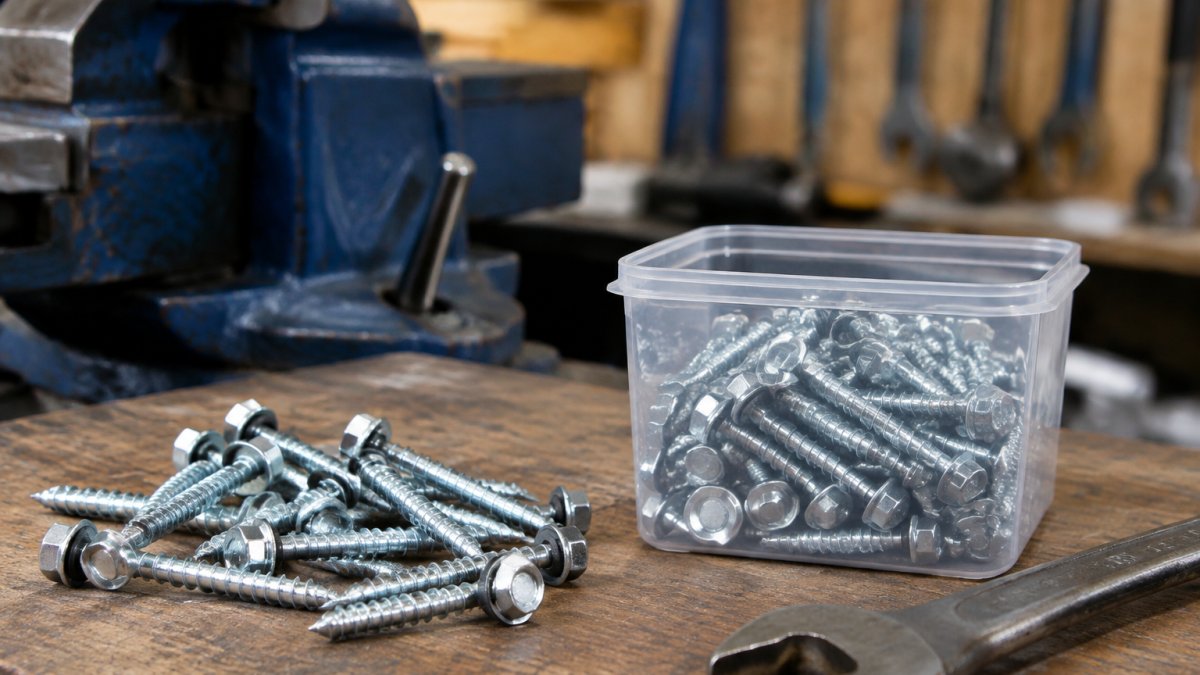
In practice, the category covers three things. First, the fasteners that join and mount components, including screws, bolts and self-drilling fixings in stainless steel and other specialist grades. Second, the abrasives and cutting tools that prepare and finish metal, such as flap discs and cut-off wheels. Third, the bespoke parts, such as mounting plates or brackets, that are made to a drawing when no standard item fits.
A common mistake is treating hardware as an afterthought. Choosing the grade, length and drive of a fixing early in the design stage avoids rework later, when a structure is already welded and a mismatched screw cannot be swapped out.
Sourcing Standard Hardware or Commissioning Custom Parts
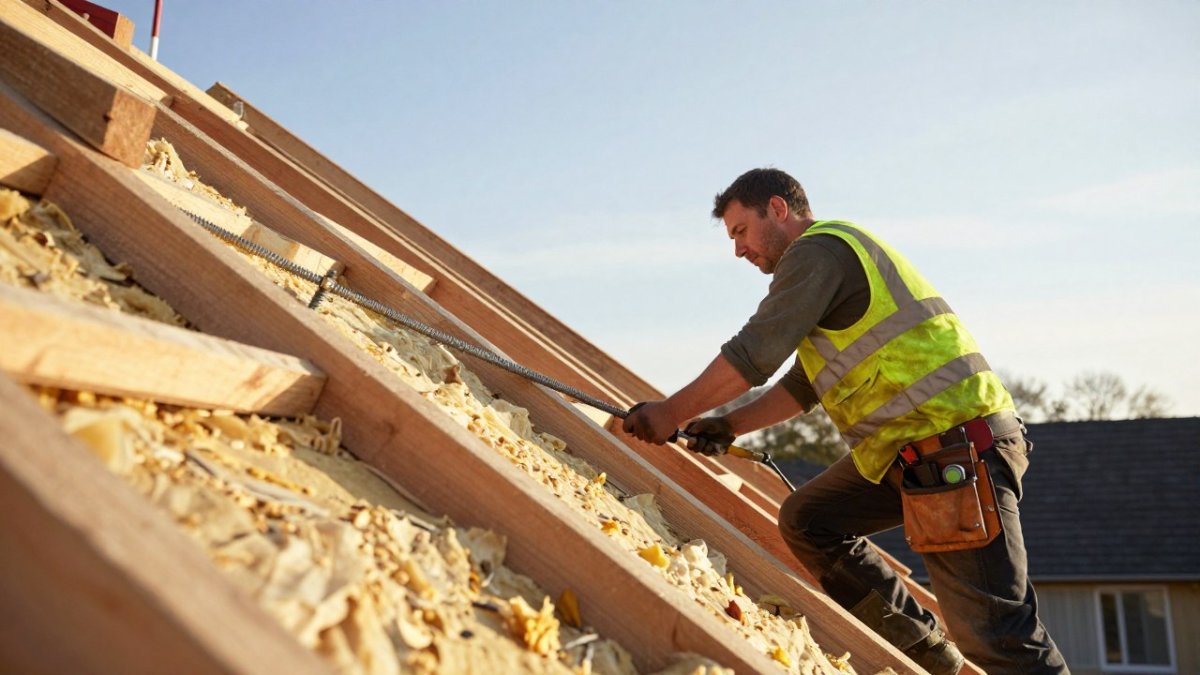
For warm-roof construction, the choice of fixing depends on matching the fixing to the roof build-up. Dual-threaded warm-roof screws depend on the thickness of the insulation, the depth of the counter batten, and the type of supporting timber. A screw that suits one build-up may be unsuitable in another.
Custom fabrication becomes relevant when the build-up is non-standard, for example, when the insulation depth falls outside the range covered by typical screws, or when the upper timber is a thin plywood deck rather than a substantial counter batten. Check the manufacturer's guidance for the screw's thread position and length in these cases.
The decision framework is straightforward. First, confirm the insulation thickness and the thickness of the upper timber. Second, check the manufacturer's design guidance for the screw's embedment depth and thread engagement. Third, verify that a suitable screw exists with the correct thread positions for that build-up.
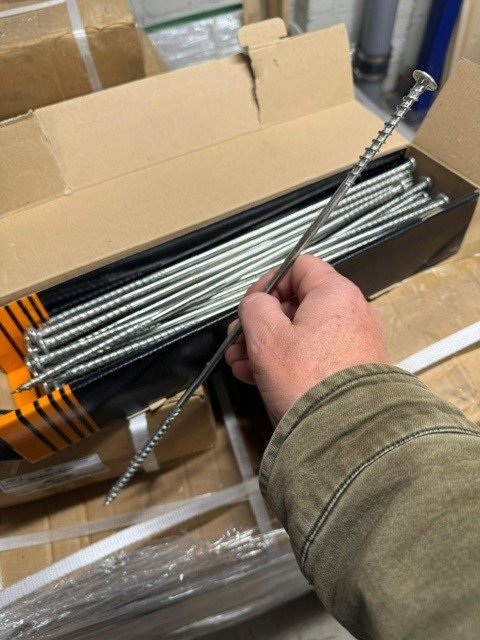
Watch out: ordering a warm-roof screw by overall length alone is a frequent error. The position of the upper thread relative to the head and the length of the smooth middle section must match the insulation and batten thicknesses. A screw that is long enough but has the wrong thread spacing will not hold the upper timber correctly.
For projects where the build-up is unusual, check the roof specification against the manufacturer's guidance before ordering.
Choosing Flap Discs for Stainless Steel Welds
Flap discs are one of the most used consumables in stainless fabrication, and choosing the wrong one can contaminate a weld area or leave an uneven finish. Stainless steel needs discs designed for the material, because general-purpose discs can embed iron particles that cause surface corrosion over time.
Look for discs marked for stainless use, with grit chosen to suit the stage of work. Browse our guide to cutting tools for stainless steel to compare the options. Coarser grit removes weld spatter and heavy oxide quickly, while finer grit blends the weld into the surrounding metal and prepares it for finishing. Working through grits in sequence produces a more even result than jumping straight to a fine disc.
Keep stainless abrasives separate from carbon steel ones in the workshop. Cross-contamination is one of the most common causes of rust bloom appearing on a finished stainless component.
Selecting Specialist Metal Fabrication Fixings
Dual-threaded warm-roof screws are a specialist fixing category, and their selection depends on understanding how the two threads interact with the timber on either side of the insulation. The thread near the tip anchors into the supporting timber below the insulation, typically a rafter or joist. The smooth middle section passes through the insulation layer. The thread beneath the head grips the upper timber, usually a counter batten, and helps maintain its position above the supporting structure. This arrangement allows roof loads to transfer through the screws into the supporting timber, reducing reliance on the insulation to carry those loads. That is particularly useful with softer insulation, which can compress under pressure.
Why not just use an ordinary long screw? An ordinary screw with a smooth shank beneath the head tends to pull the upper timber towards the lower timber as you tighten it. With insulation between them, this can compress the insulation. The additional upper thread helps restrain that movement.
When specifying these fixings, start with the roof build-up. The screw length must be sufficient to embed the tip thread into the supporting timber and engage the upper thread in the counter batten, while the smooth middle section must span the full insulation thickness. Thread positions, embedment, spacing and installation angle must suit the roof build-up and the manufacturer's design guidance.
For plywood decks, check the specific screw's suitability. The upper thread needs sufficient engagement in the upper timber; a screw designed for a substantial counter batten should not automatically be assumed suitable for thin plywood. A common pattern is to use a flanged button head, which distributes the clamping force over a wider area of the upper timber and reduces the risk of pull-through. The Eurotec Topduo flanged button head is one example of this design, with a dual thread and a flanged head for warm-roof applications.
Watch out: a screw that reaches the required depth but has insufficient upper thread engagement in a thin deck will not hold the counter batten securely. Always confirm the minimum timber thickness for the specific screw.
Eurotec Topduo flanged button head product page
Standards, Compliance and Sustainable Sourcing
Sustainable sourcing is an area competitors rarely address in detail. Stainless steel is highly recyclable, and choosing a durable grade reduces the need to replace fixings that fail through corrosion. Buying in pack sizes that match your project, rather than over-ordering, also limits waste. Where possible, retain offcuts and used abrasives for recycling through your local metals or waste service.
Planning Your Next Workshop Hardware Order
A reliable order starts with a complete parts list drawn from the design, not from memory on the day. List each fixing by grade, diameter, length, thread length and quantity, and add a margin for waste and test pieces. Group items by supplier lead time so that long-lead custom parts are ordered first.
Before ordering, confirm the drawing or specification against the parts list, check that disc and fixing grades match the material, and agree delivery timing with your build schedule. If you are unsure whether a catalogue item will work, send the drawing or dimensions and ask before committing to a bespoke run.
Frequently Asked Questions
What hardware is essential for a professional metal fabrication workshop?
Most fabrication workshops need a reliable set of cutting and abrasive consumables, and a range of fasteners in the grades the work demands. Stainless steel and aluminium jobs usually call for dedicated flap discs and fixings rated for those materials, so mixing them with mild steel consumables can cause contamination and poor finishes. Pricing depends on quantity, specification and delivery, so check current prices on the Swiftfix Distributors Ltd website or request a quote before ordering.
How do I choose the right fasteners for custom steel fabrication?
Start with the load, the material of both parts being joined, and the environment the finished item will face. Stainless steel grade 316 is commonly specified where corrosion resistance matters, such as marine work, while thread length and diameter must suit the thickness of the material being clamped. Confirm the thread length with a drawing before ordering, because an incorrect length is one of the most common reasons for a rejected delivery.
When should a workshop choose custom fabrication over standard hardware?
Standard hardware suits most repeat jobs, but custom parts make sense when a bracket, mounting plate or frame must match a specific geometry or when no catalogue size fits. Custom fabrication typically involves longer lead times, so it is usually justified for one-off or short-run work. Confirm lead times and minimum quantities with the supplier before committing to either route.
What should I check when hardware arrives in the wrong specification?
Check the marking, grade and dimensions against your order and any packing slip as soon as the parcel is opened. Keep the packaging until the items are confirmed, and contact the supplier so a replacement or correction can be arranged. Recording the batch details against your project notes makes any later query faster to resolve.