 Ultimate guide
Marine Engineering Bolt Specifications: A Complete Guide
Table of Contents
- What Marine Bolt Specifications Cover and Why They Matter
- Bolt Types, Thread Forms and Thread Standards
- Materials for Marine Environments: A4 Stainless Steel Bolt Specifications Explained
- Reading Grades, Property Classes and Strength Ratings
- Diameter, Length and Thread Pitch: Using a Marine Bolt Size Chart
- Galvanic Corrosion Between Marine Fasteners and Metals
- Tensile, Shear and Clamping Load Considerations
- Marine Fastener Inspection and Maintenance Procedures
- Specifying Your Next Marine Bolt Order
- Frequently Asked Questions
Last Updated: November 20, 2026
What Marine Bolt Specifications Cover and Why They Matter
Marine bolt specifications define the size, material, thread form, strength and coating a fastener must meet before it goes into a vessel or a marine structure. Getting them right is what keeps a fitting attached when a boat is pounding into a sea, or a stainless fixing is sitting in salt spray for years. Swiftfix Distributors Ltd supplies construction and marine fixings, and the guidance below is written to help you read a specification sheet and order the right part first time.
A specification sheet usually tells you five things: the nominal diameter, the length, the thread pitch, the material and grade, and the mechanical strength. Each one affects how the bolt behaves in service. A bolt that is the right diameter but the wrong material can still fail within a season in a salt-laden environment.
Most marine failures we see come from specifications that were copied from a previous job without checking the new environment. A bolt suited to a dry internal bulkhead is not the same choice as one bolting a deck fitting exposed to wave wash. The sections that follow take each part of the specification in turn.
Bolt Types, Thread Forms and Thread Standards
Bolts, screws and studs are often confused, but the difference matters when you order. A bolt passes through a clearance hole and is held by a nut. A screw threads into a tapped or self-forming hole in the material. A stud is threaded on both ends and is usually fixed in place with a nut on each side.
Thread form is the profile of the thread, and in the UK the two systems you will meet most are metric (ISO) and imperial (Unified). Metric threads are described by diameter and pitch in millimetres, such as M16 x 2. Unified threads use threads per inch and are common on some older or imported equipment. Mixing the two on the same assembly causes poor engagement and damaged threads, so confirm the system before you order.
Thread standards also set the tolerance class, which controls how tightly the nut fits the bolt. A coarse thread is easier to assemble and tolerates dirt better, while a fine thread gives greater preload for a given torque. Check which pitch your drawing calls for rather than assuming the coarse thread is standard.
Materials for Marine Environments: A4 Stainless Steel Bolt Specifications Explained
A4 stainless steel, also called 316 stainless, is the material most often specified for marine work because the molybdenum content in its alloy gives it better resistance to chloride attack than standard A2 (304) stainless. In practice this means A4 is the usual choice for boat fittings, deck hardware and anything routinely wetted by seawater.
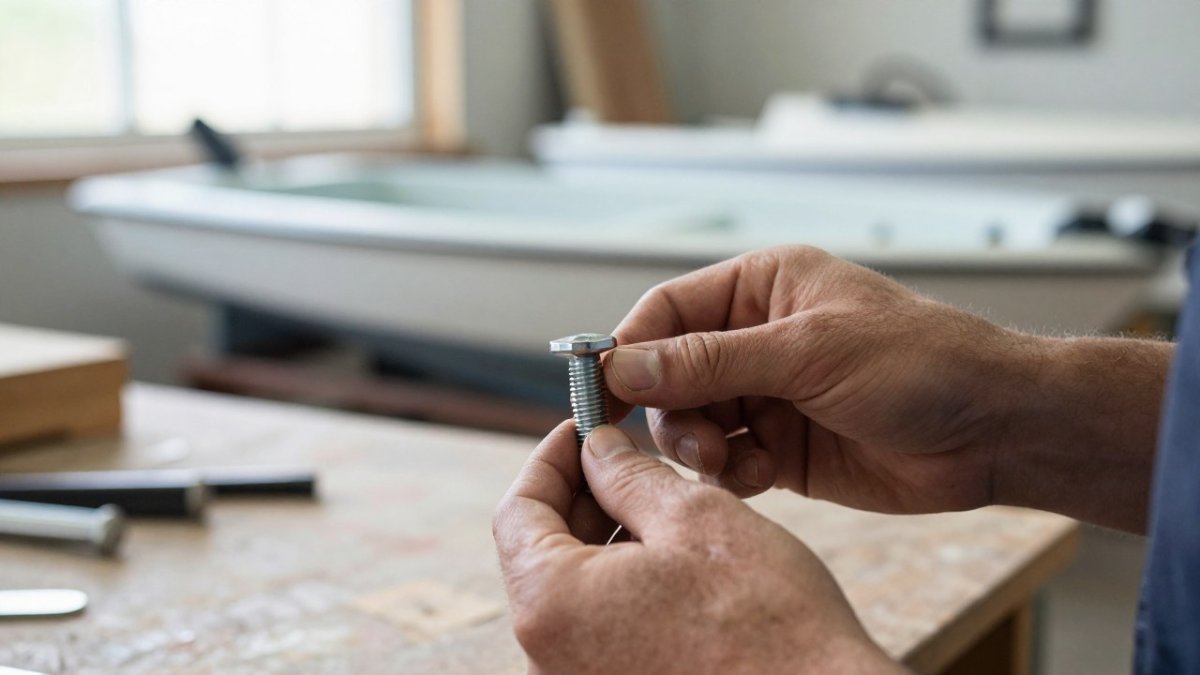
When you read an A4 specification, look for the grade marking and a material certificate that confirms the chemical composition. Be cautious of fasteners sold as "marine grade" without any traceable certificate, because the label alone tells you very little about the alloy.
A4 stainless is not immune to corrosion. Crevices, trapped salt deposits and contact with dissimilar metals can all cause localised attack, so the material choice must be paired with correct installation and a suitable design. Our recommendation is to specify A4 for exposed marine fixings and to confirm the grade on delivery, not to assume it.
For a comparison of stainless against bronze in marine service, see our guide on how to choose silicon bronze or 316 stainless fasteners.
Reading Grades, Property Classes and Strength Ratings
Stainless steel bolts carry grade designations such as A2-70 or A4-80. The first part identifies the alloy family, and the number after the dash gives the minimum tensile strength in units of 100 MPa. An A4-80 bolt therefore has a minimum tensile strength of around 800 MPa, while an A4-70 bolt is rated at around 700 MPa.
Carbon and alloy steel bolts use property classes instead, such as 8.8 or 10.9. The first number gives the tensile strength in hundreds of MPa and the second gives the yield ratio. Higher classes are stronger but can be more prone to hydrogen embrittlement in certain plating processes, which is one reason they are not automatically the better choice for wet marine use.
Strength ratings matter most when a bolt carries structural load. For fittings that are primarily there to seal or locate rather than carry load, the corrosion resistance of the material is usually the more important property.
Diameter, Length and Thread Pitch: Using a Marine Bolt Size Chart
A marine bolt size chart lists the nominal diameter, the thread pitch and the usable length for each standard size, so you can confirm that a bolt will fit the hole and grip the material properly. Start by measuring the clearance hole with a caliper, then choose the nominal diameter that matches the hole.
Length is measured from under the head to the tip. As a rule of thumb, the thread should project through the nut by at least one full turn, and the grip length should match the combined thickness of the parts being clamped. Ordering a bolt that is too short is a common mistake that leaves the nut with too little engagement.
Thread pitch must match the nut you intend to use. A coarse M16 nut will not sit correctly on a fine-pitch M16 bolt, and forcing the two together strips the threads. Always check the pitch on both components, particularly when reusing hardware from an older installation.
Galvanic Corrosion Between Marine Fasteners and Metals
Galvanic corrosion happens when two dissimilar metals are in electrical contact in the presence of an electrolyte such as seawater. The less noble metal corrodes faster, and the fastener is often the one that suffers when it is in contact with a more noble material.
In marine work, the risk is greatest when stainless fasteners are used with aluminium hulls or fittings, because the galvanic difference between the two is substantial. Common practice is to isolate the metals with non-conductive washers or sleeves and to use sealants that keep electrolyte out of the joint.
The fastener choice should also consider the surrounding metal. Silicon bronze is often used where the parent material is a copper alloy, and the compatibility between a fastener and its substrate should be checked before the order is placed rather than discovered during a refit.
Tensile, Shear and Clamping Load Considerations
A bolt in a marine joint carries three kinds of load. Tensile load pulls the bolt along its axis, shear load acts across it, and clamping load is the preload applied by tightening the nut. Clamping load is what holds the joint together, and it is usually the most important of the three in a sealed or vibrating assembly.
Tensile and shear capacities are published by the manufacturer and depend on the bolt's grade, diameter and thread condition. Use the published figures rather than estimates, and apply the safety factors that your application or classification body requires.
Tightening torque is the usual way to reach a target clamping load, but the relationship between torque and preload depends on friction, lubrication and thread condition. Specify the torque and the lubricant together, and do not assume a dry torque value applies to a greased thread.
Marine Fastener Inspection and Maintenance Procedures
Fasteners in marine service need a scheduled inspection regime rather than a glance when something looks wrong. A workable pattern is to inspect accessible deck and hull fittings at least every six months, and more frequently, quarterly or after any significant passage, for critical items such as rigging chainplates, rudder stock fixings and through-hull assemblies. Classification societies and flag-state survey requirements may set their own intervals, so treat these as a minimum and defer to the survey schedule where one applies.
Inspection should be systematic. Check for rust bleeding or staining at the thread and under the head, which often signals crevice corrosion where electrolyte has been trapped. Look for cracked or deformed washers, elongation of the bolt, and any sign of loosening, a nut that has lost its witness mark or a joint that has started to weep. On stainless fasteners, pitting or a rough, frosted surface is a warning sign even if the bolt still feels tight.
Torque control is part of maintenance, not just installation. Where a torque value is specified, re-check it at the inspection interval using a calibrated wrench, and record the reading. A bolt that has lost preload will often show a lower breakaway torque than when it was installed. Do not simply tighten by feel; over-tightening a corroded or embrittled fastener can cause it to fail at the head or thread.
Lubrication and anti-seize compounds need to be reapplied where specified, particularly on threads that are exposed to salt spray. Use a product compatible with the fastener material and the surrounding metals, a copper-based anti-seize on a stainless bolt in contact with aluminium can worsen galvanic risk. Where a manufacturer specifies a particular lubricant for a torque value, use that lubricant; a dry torque figure does not transfer to a greased thread.
Replacement criteria should be written down. Replace any fastener that shows pitting, thread damage, significant corrosion, or that has been subjected to a load beyond its design rating (for example after a grounding or a rigging shock). Do not reuse a bolt that has been stretched; check length against a new item if in doubt. Keep a record of grade, batch or certificate number, installation date and inspection results so that patterns of failure can be spotted and the specification improved.
Watch out: a fastener that looks sound externally can be wasting from the inside at a crevice, so where safety-critical fixings are inaccessible, consider removal and inspection at the intervals your surveyor or classification body recommends rather than relying on external appearance alone.
Specifying Your Next Marine Bolt Order
A marine bolt order should be written as a specification, not a shopping list. Before you send it, confirm the nominal diameter and length, the thread pitch and thread system (metric or Unified), the material grade (for example A4-80), the property class where carbon or alloy steel is used, the coating or finish, and the quantity including a sensible allowance for spares and for any fasteners likely to be damaged during installation.
Traceability is the part most often missed. For safety-critical or classified installations, ask for a material certificate that states the grade and chemical composition, and check that the certificate matches the marking on the fastener and on the packaging when the goods arrive. Batch or heat numbers should be recorded so that if a problem emerges later you can trace which fixings came from which delivery. A supplier who cannot provide traceable documentation for a marine-grade fastener is a risk, however convincing the label.
Check the markings themselves. Stainless bolts should carry the grade designation (A2 or A4) and the property class (70 or 80). Carbon and alloy steel bolts carry the property class (8.8, 10.9 and so on). If the marking is missing, faint or inconsistent with the certificate, reject the delivery before fitting rather than after.
Procurement checks should also cover the thread system and pitch against your drawing, the length measured from under the head, and the finish, a zinc-plated bolt is not a substitute for a stainless or hot-dip galvanised item in a wet marine location. Where a classification society or flag-state rule applies to the installation, confirm that the fastener and its documentation meet that requirement before the order is placed, not after the goods are on site.
Watch out: mixing batches from different suppliers on the same assembly can undermine traceability, so keep fasteners from separate deliveries segregated and recorded until they are fitted.
Frequently Asked Questions
What bolt materials are suitable for marine environments?
A4 (316) stainless steel is the most common choice for marine fixings because its molybdenum content gives better resistance to chloride attack from seawater than A2 (304). Silicon bronze and hot-dip galvanised options are also used in specific applications, such as fittings below the waterline or where dissimilar metals are a concern. The right choice depends on the immersion level, the metals it contacts and the load it carries. Check the material certificate and grade marking before fitting, and confirm the specification with your boat builder or engineer where structural loads are involved.
What is the difference between A4 and A2 stainless steel bolts?
A2 and A4 are the austenitic stainless steel groups defined in BS EN ISO 3506. A2 is roughly equivalent to 304 and A4 to 316. The key difference is molybdenum, which A4 contains and which improves resistance to pitting and crevice corrosion in chloride-rich environments such as seawater. For sheltered freshwater or dry internal use, A2 is often adequate. For exposed marine work, A4 is the safer specification, and it is worth asking suppliers for the certificate showing the actual chemical composition.
How do I identify a bolt's grade and strength class?
Metric bolts carry a property class marking on the head, such as 8.8, 10.9 or 12.9, where the first number relates to tensile strength and the second to yield ratio. Stainless fasteners are marked with a grade such as A4-70 or A4-80, where the number indicates minimum tensile strength in the form of a multiple of 10 MPa. Look for the manufacturer's mark and cross-check against the packaging and any test certificate. If markings are absent or unclear, do not use the fastener in a load-bearing application.
How do I choose the correct bolt diameter and length for a marine application?
Start with the required clamping load and the thickness of the materials being joined, then select a diameter that meets the design calculation for that joint. Length should allow full thread engagement through the nut or tapped hole while leaving the thread clear of the joint face, usually with one to two thread diameters protruding through a nut. Use a marine bolt size chart to confirm metric dimensions and thread pitch, and consult the structural drawings or a qualified engineer for any load-critical joint.
Are stainless steel bolts suitable for every marine application?
No. Stainless steel performs well in many marine locations but can suffer crevice corrosion in stagnant seawater, and it is vulnerable to chloride stress corrosion cracking at higher temperatures. It can also corrode when in contact with more noble metals, such as copper alloys, if moisture bridges the two. Bronze fasteners are often preferred for below-waterline fittings, and hot-dip galvanised or other coatings may suit certain steel structures. Match the fastener to the specific environment and the metals in contact.
How can galvanic corrosion affect marine fasteners?
Galvanic corrosion occurs when two dissimilar metals are in electrical contact in the presence of an electrolyte such as seawater. The less noble metal corrodes preferentially. A stainless bolt in an aluminium hull, for example, can accelerate corrosion of the aluminium around the fixing. Reduce the risk by selecting compatible materials, using insulating washers or sleeves, applying sealants that exclude moisture, and keeping the area of the more noble metal small compared with the less noble component where possible.
How should marine bolts be tightened and maintained?
Tighten to the torque or preload specified by the design, using a calibrated torque wrench and lubricant where the specification calls for it, since lubrication changes the torque-to-tension relationship. Avoid over-torquing stainless fasteners, which can gall and seize. Inspect joints periodically for looseness, staining, crevice corrosion and cracking, and retighten or replace as required. Keep a record of inspection dates to support traceability on commercial vessels.
When should a marine bolt be replaced?
Replace a bolt when you find visible pitting, crevice corrosion, cracking, necking, thread damage, distortion, or significant loss of section, and whenever a fastener has been overloaded or subjected to a fire. Also replace fasteners that cannot be restored to the specified torque, or where galvanic attack has weakened the joint. Use fasteners of the same specification and material, and never reuse damaged or permanently stretched bolts in load-critical positions. When in doubt, replace the fastener and check the mating components.